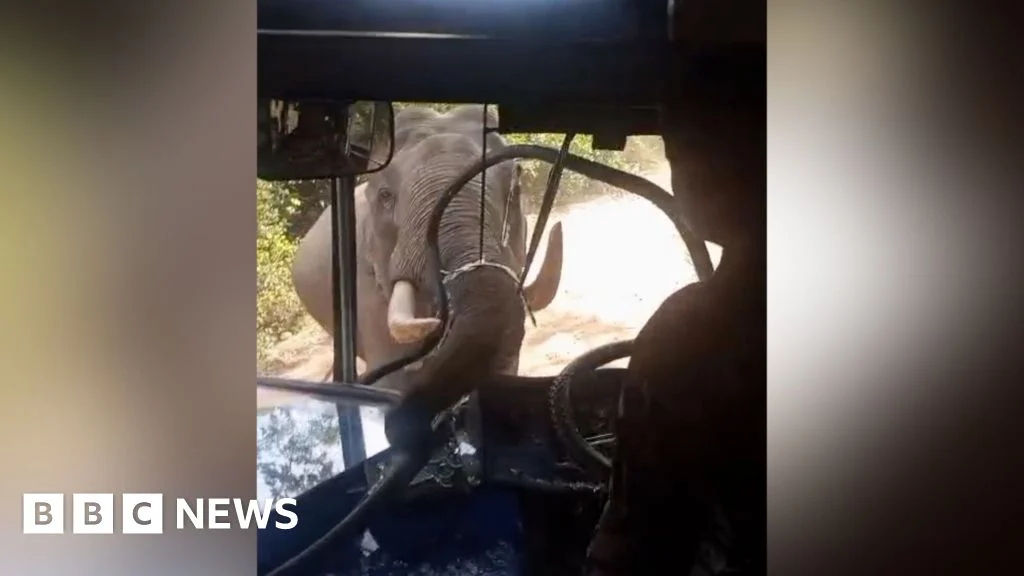
A massive adult elephant slammed its tusks into the front windscreen of a military bus, sending glass spraying across the road as the vehicle careened back onto the highway.
The shocking elephant attack happened on Tuesday, March 19, 2026, near the town of Kandy in central Sri Lanka, where a convoy of twelve air force personnel was traveling to a training exercise.
Video captured by a passenger shows the animal charging from the roadside, breaking the glass, then retreating into the scrub before the driver could stop.
What happened on the road?
According to the BBC video, the bus was moving at roughly 40 km/h when the elephant lunged forward. The impact cracked the entire windshield, injuring two soldiers who suffered cuts from shattered glass. Both were treated at a field clinic and released later that day.
Witnesses say the elephant, estimated to weigh around 4,500 kg, appeared agitated, possibly reacting to recent human activity in the forest fringe.
Why does this matter?
Elephant‑human conflicts have risen 30% in Sri Lanka over the past five years, according to wildlife officials. As the island nation pushes for tourism and infrastructure development, encounters like this expose gaps in safety protocols for military and civilian vehicles that share rural roads with wildlife.
For travelers, the incident is a stark reminder that even routine commutes can become life‑threatening when wildlife corridors intersect with highways.
What are the wider implications?
The Ministry of Defence has pledged a review of convoy routes that pass through known elephant habitats. Conservation groups argue that better fencing and early‑warning systems could reduce future clashes.
In the meantime, the incident has sparked debate on how to balance economic growth, defense readiness, and the protection of Sri Lanka’s iconic megafauna.
Read more about related safety concerns in our climate and environment coverage, and follow updates on military logistics in the war and geopolitics section.
Authorities say a full investigation will be launched next week, and officials will decide whether to reroute the air force’s training convoys away from high‑risk zones.
Stay tuned as we follow the outcome of the inquiry and what it means for both national security and wildlife conservation.