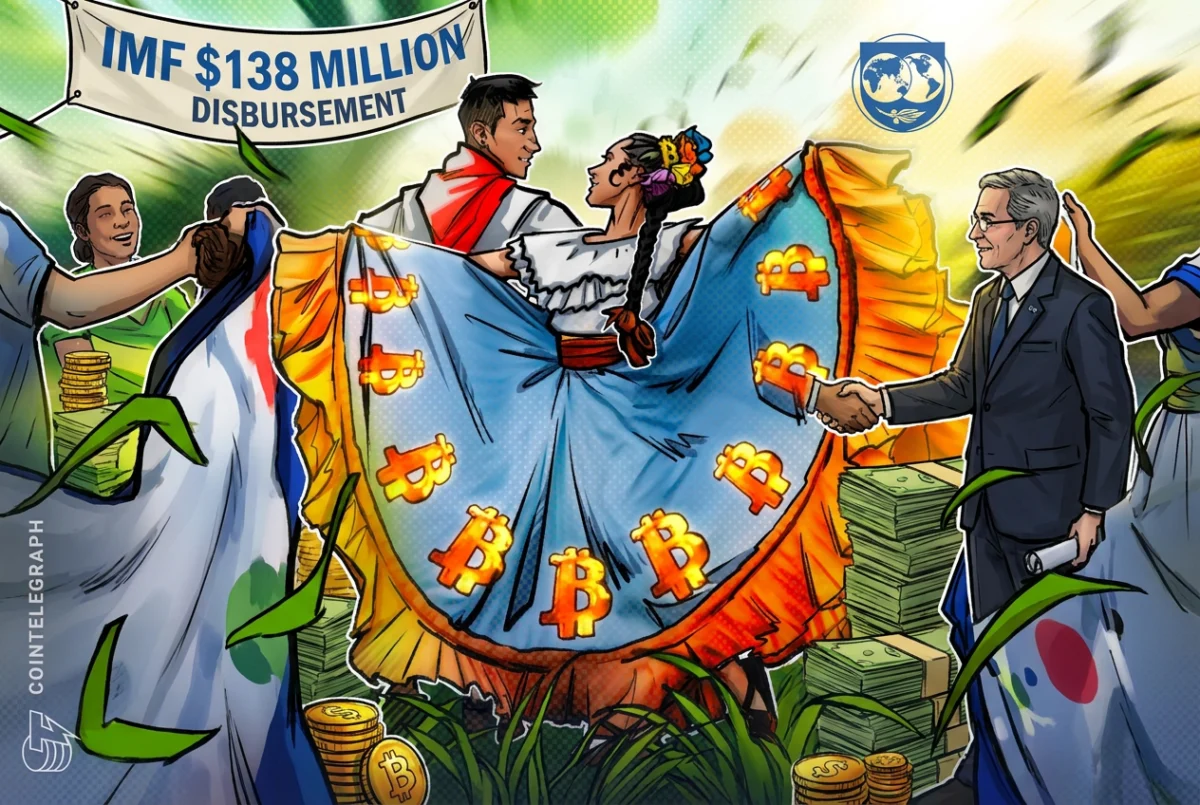
El Salvador has received $138 million from the International Monetary Fund (IMF) following the granting of Bitcoin-related waivers, according to a report by Cointelegraph.com News. The release of funds comes amid ongoing efforts by the IMF to ensure that El Salvador reduces state involvement in Bitcoin-related activities and strengthens its regulatory framework for crypto-assets.
The IMF has emphasized that continued engagement with El Salvador will focus on improving governance around cryptocurrencies, particularly Bitcoin, which the country adopted as legal tender in 2021. The waivers granted by the IMF appear to have allowed the disbursement to proceed despite earlier concerns over risks tied to Bitcoin’s volatility and the government’s direct participation in the market.
The exact nature of the Bitcoin-related waivers remains tied to conditions set forth by the IMF as part of an economic program with El Salvador. While specific terms were not detailed in the summary provided, the focus on reducing state involvement suggests that measures may include limitations on public investment in Bitcoin or restrictions on government endorsement of the asset. The IMF has long expressed caution regarding countries adopting cryptocurrencies as official currency, citing financial stability and transparency concerns.
Key Facts
- El Salvador received $138 million from the IMF.
- Bitcoin-related waivers were granted prior to the disbursement.
- The IMF aims to reduce state involvement in Bitcoin activities.
- The IMF plans to strengthen crypto-asset regulation and governance.
What This Means for Crypto Policy
The IMF’s decision to grant Bitcoin-related waivers and disburse $138 million signals a cautious but conditional approach to engaging with nations experimenting with digital currencies. By tying financial support to reforms aimed at reducing government exposure to Bitcoin, the IMF is reinforcing its long-standing position that unchecked adoption of volatile assets poses risks to macroeconomic stability.
This development also underscores the growing influence of international financial institutions over national crypto policies. Countries seeking funding or debt relief may increasingly find themselves required to implement stricter oversight of their digital asset frameworks. For El Salvador, this could mean navigating a delicate balance between maintaining public interest in Bitcoin and complying with IMF-mandated reforms.
What Happens Next?
Following the receipt of the $138 million, attention will likely turn to how El Salvador implements the IMF’s recommendations regarding reduced state involvement in Bitcoin and enhanced regulatory structures. The pace and scope of these changes remain uncertain, especially given the political prominence of Bitcoin adoption in the country since 2021.
Observers will also watch for further dialogue between El Salvador and the IMF. Any additional funding releases or revised loan terms could depend on demonstrable progress in curbing government-backed crypto initiatives. Meanwhile, regional and global crypto markets may react to signals emanating from this high-profile case of sovereign digital currency integration.
What We Know — and What We Don’t
Verified by the source:
- El Salvador received $138 million from the IMF.
- The release followed the granting of Bitcoin-related waivers.
- The IMF stated intentions to reduce state involvement in Bitcoin activities.
- The IMF noted plans to strengthen crypto-asset regulation and governance.
Still unconfirmed:
- The specific conditions attached to the Bitcoin waivers.
- Details about El Salvador’s implementation timeline for IMF recommendations.
- Whether future IMF disbursements are linked to measurable compliance steps.
- Statements or reactions from El Salvadoran officials.
The IMF’s engagement with El Salvador highlights broader tensions between innovation-friendly fiscal policies and the conservative stance traditionally held by global financial watchdogs. This dynamic continues to shape discussions around the role of digital currencies in national economies.
Why It Matters
El Salvador’s receipt of IMF funding after Bitcoin waivers illustrates the evolving regulatory landscape surrounding cryptocurrencies. As more countries explore digital assets, institutions like the IMF play a pivotal role in shaping acceptable practices, influencing both policy outcomes and investor confidence worldwide. Learn more about developments in [trading-crypto](/category/trading-crypto) and [economy-markets](/category/economy-markets).
What To Watch
Future IMF communications regarding El Salvador’s compliance with Bitcoin reform conditions could impact regional crypto regulation trends.