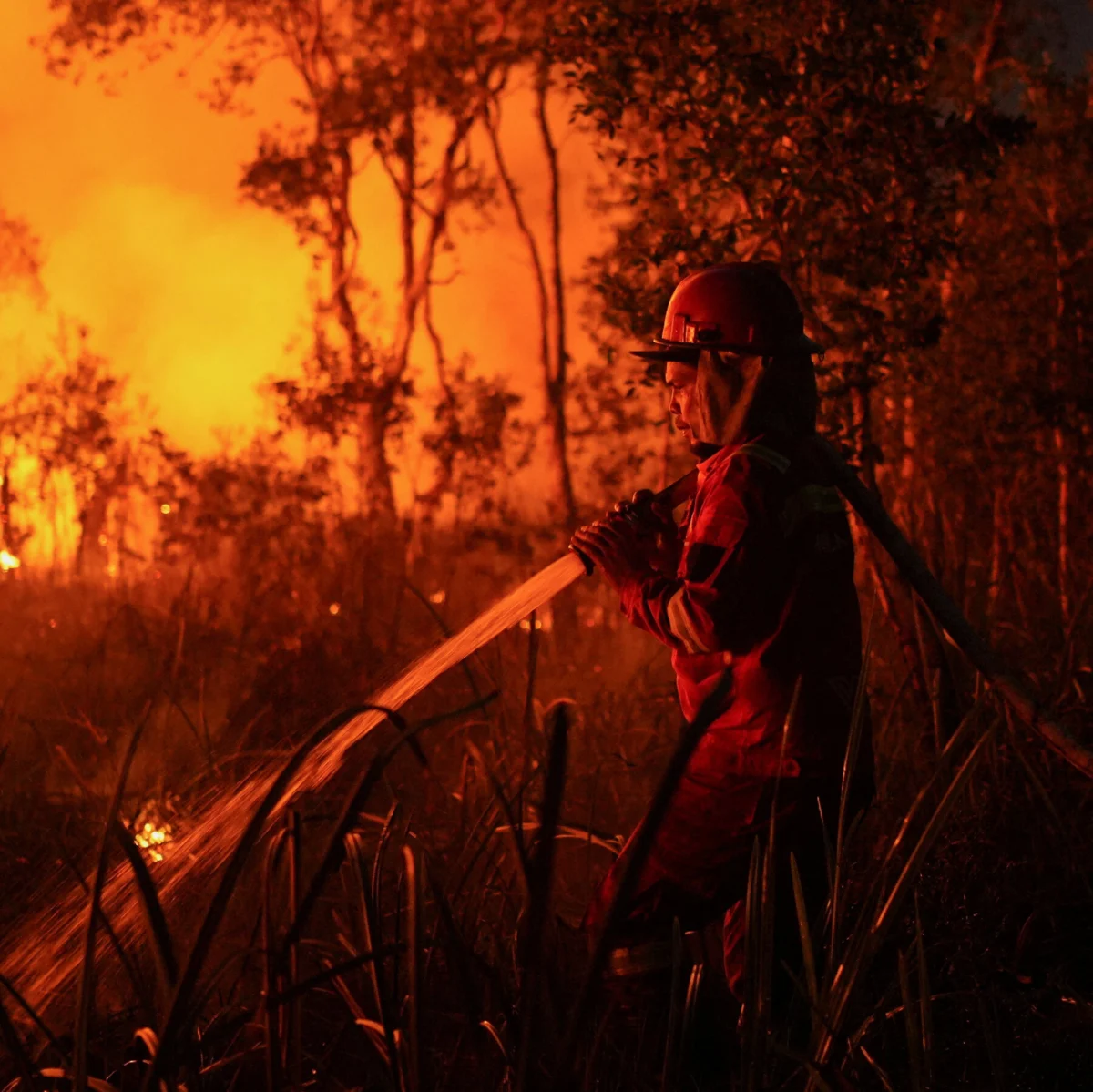
El Niño conditions are drying out parts of Indonesia, raising the risk of more intense wildfires.
The unusual weather pattern and dried out peatlands—a kind of wetland—have contributed to some of the nation’s worst fire seasons, and this year could follow a similar trend.
Key Facts
- El Niño dries Indonesia
- Dried out peatlands contribute to fire seasons
- This year could be one of the worst fire seasons
How does El Niño affect fires?
El Niño is a climate pattern characterized by warmer-than-average sea surface temperatures in the central and eastern Pacific Ocean. This warming shifts global atmospheric circulation, often reducing rainfall over Southeast Asia, including Indonesia. When rains fail, soils and vegetation lose moisture, creating conditions that favor ignition and spread of fires.
Peatlands are water‑logged soils rich in organic matter. Under normal wet conditions they resist burning, but when drained or dried they become highly flammable. The source notes that dried out peatlands have been behind some of Indonesia’s worst fire seasons, linking the El Niño‑driven drying to increased fire risk.
What happens next?
The summary states that this year could be one of the worst fire seasons, but it does not provide a definitive outcome. Forecasts will depend on how long the El Niño conditions persist and whether rainfall returns to normal levels. Continued monitoring of weather patterns and peatland moisture will be essential to gauge the actual fire activity.
What We Know — and What We Don’t
Verified by the source:
- El Niño is drying parts of Indonesia
- Dried out peatlands have contributed to severe fire seasons
- The current year could be among the worst fire seasons
Still unconfirmed:
- Exact scale or duration of this year’s fire activity
- Whether rainfall will return to normal before the fire season peaks
- Specific areas that will experience the most intense burning
Why It Matters
More intense wildfires release large amounts of carbon dioxide and particulate matter, affecting air quality, public health, and regional climate. Peatland fires also threaten carbon stores that have taken millennia to accumulate, undermining efforts to limit greenhouse‑gas emissions.
What To Watch
Observers should track updates on El Niño strength, regional rainfall forecasts, and any official fire‑danger assessments from Indonesian authorities. Changes in these factors will indicate whether the anticipated severe fire season materializes.