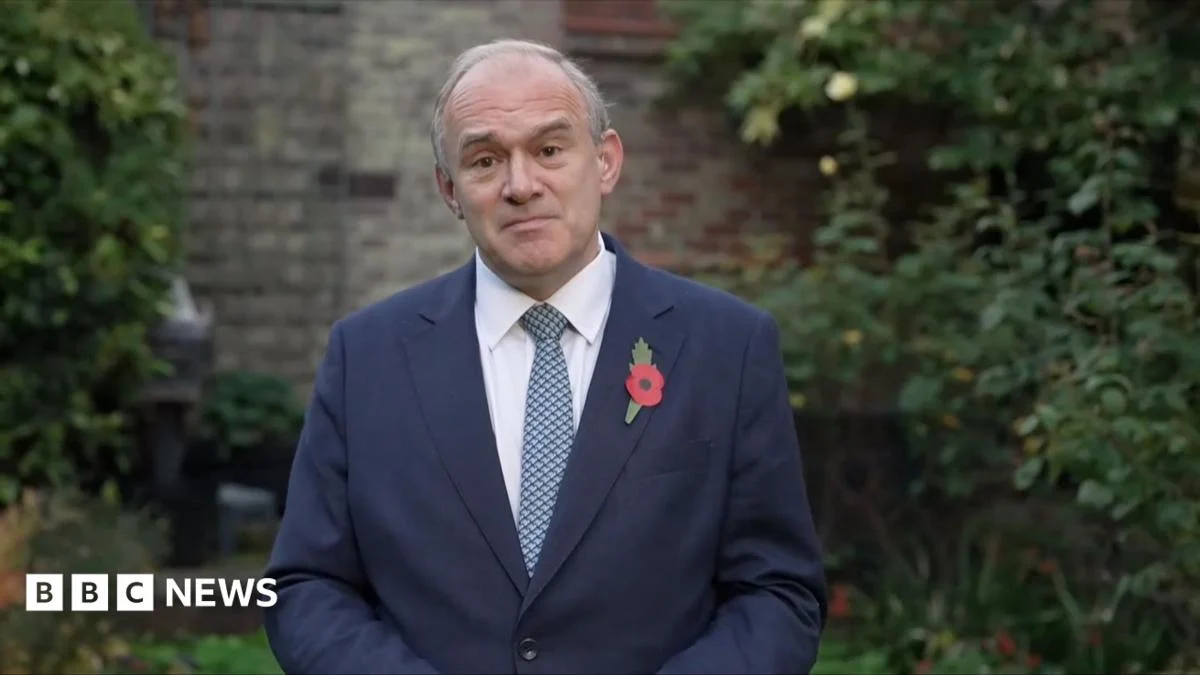
Liberal Democrats leader Ed Davey has described a freeze on income tax thresholds as a â£76bn stealth tax rise, arguing that the policy effectively increases the tax burden on UK taxpayers without a formal legislative change.
Davey made the claim publicly, framing the threshold freeze as equivalent to a large-scale tax increase that affects millions of workers whose incomes rise above the frozen thresholds. His comments come amid ongoing political debate over fiscal policy and how governments fund public spending.
Key Facts
- Liberal Democrats leader Ed Davey called the freeze a â£76bn stealth tax rise.
- The freeze applies to income tax thresholds in the UK.
- Davey characterised the measure as a stealth tax rise.
- The reported value of the policy is â£76bn.
The Story
What happens next?
The freeze on income tax thresholds means that as people receive pay rises or inflation pushes nominal wages higher, more of their earnings fall into higher tax brackets. This can increase the total amount of income tax paid even if official tax rates remain unchanged.
Politically, such freezes are often labelled by opposition parties as de facto tax increases. They argue that failing to adjust thresholds in line with inflation or wage growth shifts the tax burden onto ordinary taxpayers without the need for new legislation.
Government responses typically stress fiscal responsibility and the need to fund public services, while critics highlight the disproportionate impact on middle- and lower-income earners who see their marginal tax rates rise through no direct policy change to rates themselves.
Who is affected?
The freeze affects anyone earning above the frozen income tax thresholds, particularly those whose salaries grow faster than the thresholds. As more income falls into higher brackets, the effective tax rate paid by these individuals increases.
Standard income tax thresholds in the UK determine at which income levels different tax rates apply. When thresholds are frozen, more taxpayers are drawn into higher-rate bands over time, increasing the total tax collected without altering statutory rates.
This mechanism is sometimes used by governments to raise revenue implicitly. Public and political reception tends to vary depending on economic conditions, with some viewing it as necessary fiscal prudence and others as hidden taxation.
How did we get here?
Income tax threshold freezes have been used in previous UK budgets as a means of raising revenue without legislating explicit tax rate changes. Governments often justify them as necessary to fund public spending during periods of economic pressure.
Opposition parties, including the Liberal Democrats, frequently challenge such freezes by calculating their aggregate fiscal impact and characterising them as stealth tax increases. These calculations form part of broader political arguments about fairness and transparency in taxation.
The debate reflects wider disagreement over how best to balance public expenditure with tax policy. While supporters argue that freezes are a pragmatic tool, critics insist they disproportionately burden ordinary taxpayers and obscure the true cost of government spending.
What We Know — and What We Don't
Verified by the source:
- Ed Davey is the leader of the Liberal Democrats.
- He described the income tax threshold freeze as a â£76bn stealth tax rise.
- The claimed monetary value of the policy is â£76bn.
Still unconfirmed:
- The exact methodology behind the â£76bn estimate is not provided.
- No official government response to Davey's claim is included.
- Broader statistical breakdowns of who benefits or is harmed are not sourced here.
Why It Matters
The framing of tax threshold freezes as stealth tax rises is central to political debates about fiscal transparency and fairness. With households facing cost-of-living pressures, how governments raise revenue and communicate those decisions influences public trust and electoral outcomes across the UK.
A single-source account, this article summarises BBC News reporting of Ed Davey's statement that the income tax threshold freeze amounts to a â£76bn stealth tax rise for UK taxpayers.
What To Watch
Future coverage may clarify whether official Treasury analysis supports the â£76bn figure and how other parties respond to Davey's characterisation of the policy as a stealth tax rise.
Follow ongoing politics and economy and markets updates for further developments.