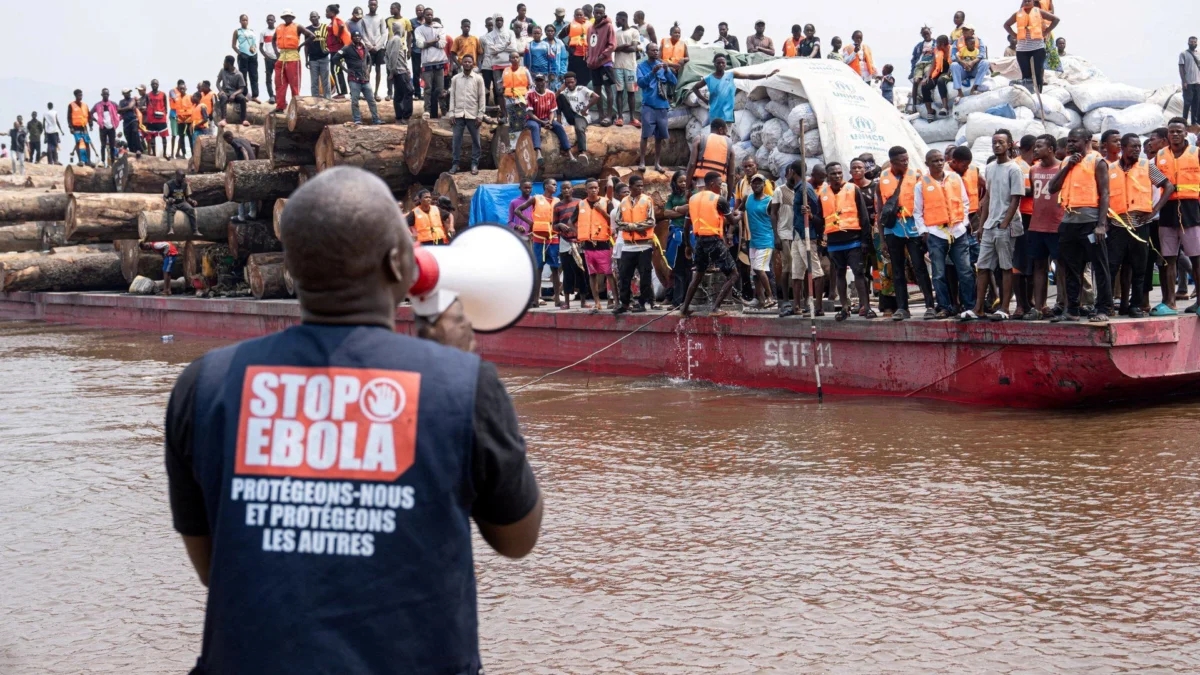
The Ebola outbreak in the Democratic Republic of Congo (DRC) is spreading at an ‘unprecedented rate,’ according to the World Health Organization (WHO) chief. The outbreak, now the world’s fastest-growing, has claimed 1,751 lives. The situation underscores the urgent need for increased funding and international support to contain the virus.
KEY FACTS
- The Ebola outbreak in DRC is spreading at an ‘unprecedented rate,’ according to the WHO chief.
- The outbreak has killed 1,751 people so far.
- This is the world’s fastest-growing Ebola outbreak.
WHAT IS HAPPENING NOW?
The Ebola outbreak in the DRC continues to escalate, with the WHO chief warning of its rapid spread. The death toll has reached 1,751, marking it as the most severe outbreak in recent history. Health officials are grappling with challenges such as limited funding and logistical hurdles in remote areas.
WHY IS THIS OUTBREAK DIFFERENT?
This Ebola outbreak is notable for its unprecedented rate of spread, according to the WHO chief. Unlike previous outbreaks, this one has proven particularly difficult to contain due to its location in conflict-affected regions, which complicates access for health workers. The high death toll and rapid transmission highlight the need for urgent intervention.
WHAT WE KNOW — AND WHAT WE DON’T
Verified by the source:
- The Ebola outbreak in DRC has killed 1,751 people.
- The WHO chief describes the outbreak as spreading at an ‘unprecedented rate.’
Still unconfirmed:
- The exact areas most affected by the outbreak.
- Whether international aid has been fully mobilized.
- The timeline for containment efforts.
WHY IT MATTERS
The Ebola outbreak in DRC is a global health emergency, with the potential to spread beyond the region if not contained. The high death toll and rapid transmission rate underscore the urgent need for international cooperation and funding to combat the virus.
WHAT TO WATCH
The international community’s response to the outbreak, including funding and logistical support, will be critical in containing the virus. Updates from the WHO and other health organizations will provide further clarity on the situation.