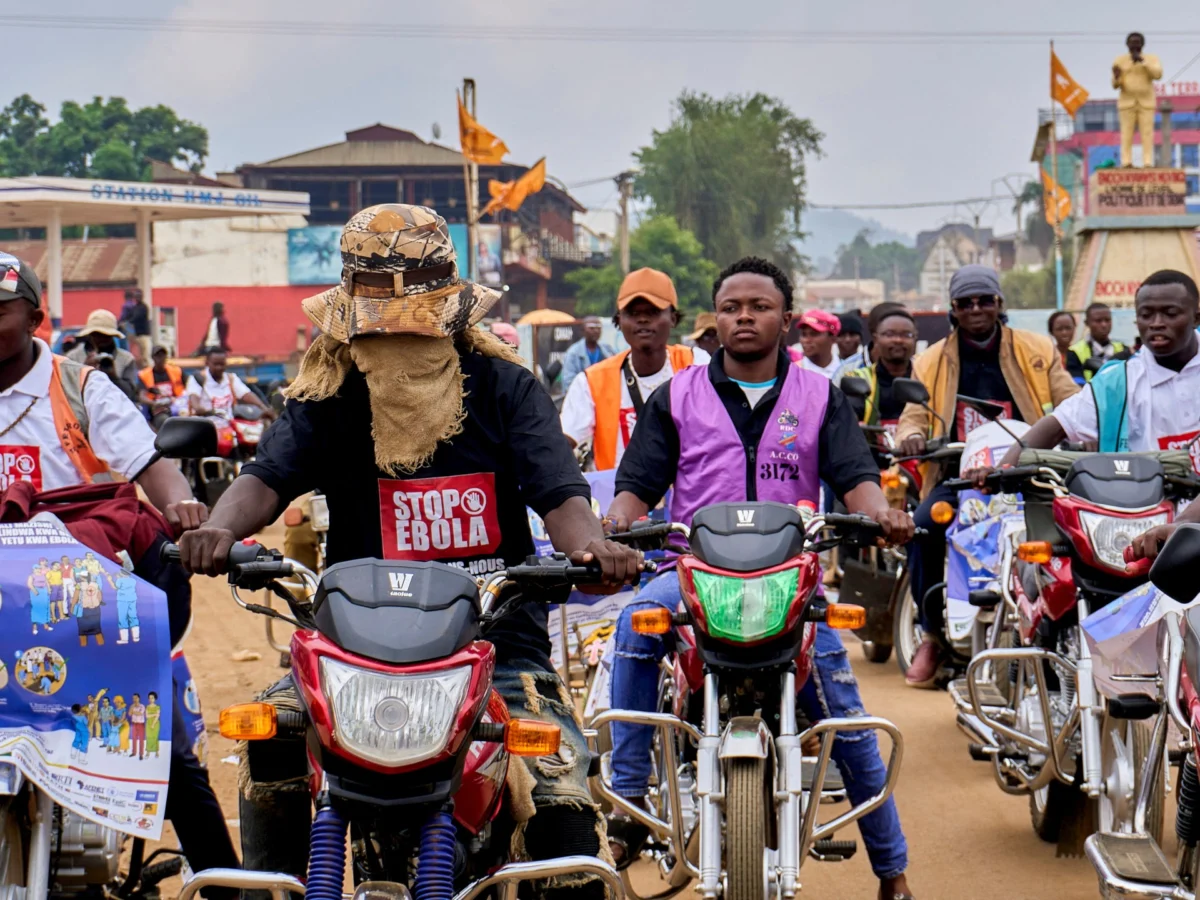
The Democratic Republic of Congo (DRC) has recorded over 4,000 Ebola cases in the ongoing Bundibugyo epidemic, now the world’s second-largest outbreak of the disease. The World Health Organization (WHO) is urging a trial of the Ervebo vaccine as the outbreak becomes the fastest-spreading on record.
KEY FACTS
- Ebola cases in DRC have surpassed 4,000 in the Bundibugyo epidemic.
- This is the world’s second-largest Ebola outbreak.
- The outbreak has been described as the fastest-spreading on record.
- WHO is urging a trial of the Ervebo vaccine to combat the spread.
WHAT IS HAPPENING IN THE DRC?
The current Ebola outbreak in the DRC has reached a critical point, with cases now exceeding 4,000. The Bundibugyo strain of the virus, which is one of several known variants, is driving this epidemic. The rapid spread has alarmed health officials, prompting calls for urgent intervention.
WHY IS THE WHO PUSHING FOR A VACCINE TRIAL?
The WHO has identified the Ervebo vaccine as a potential tool to curb the outbreak. While the vaccine has shown efficacy against the Zaire strain in previous outbreaks, its performance against the Bundibugyo strain remains uncertain. A trial would assess its effectiveness in the current context.
WHAT WE KNOW — AND WHAT WE DON’T
Verified by the source:
- The Bundibugyo epidemic has surpassed 4,000 cases.
- It is the world’s second-largest Ebola outbreak.
- WHO is advocating for an Ervebo vaccine trial.
Still unconfirmed:
- The exact mortality rate of the current outbreak.
- Whether the Ervebo vaccine will be effective against the Bundibugyo strain.
- The timeline for the proposed vaccine trial.
WHY IT MATTERS
Ebola outbreaks pose significant public health risks, with high mortality rates and the potential for rapid spread. The DRC’s ongoing struggle with the disease highlights the need for effective vaccines and containment strategies, particularly in regions with limited healthcare infrastructure.
WHAT TO WATCH
Health officials will monitor the progression of the outbreak and the WHO’s efforts to initiate a vaccine trial. The response to this epidemic could set important precedents for managing future Ebola outbreaks.