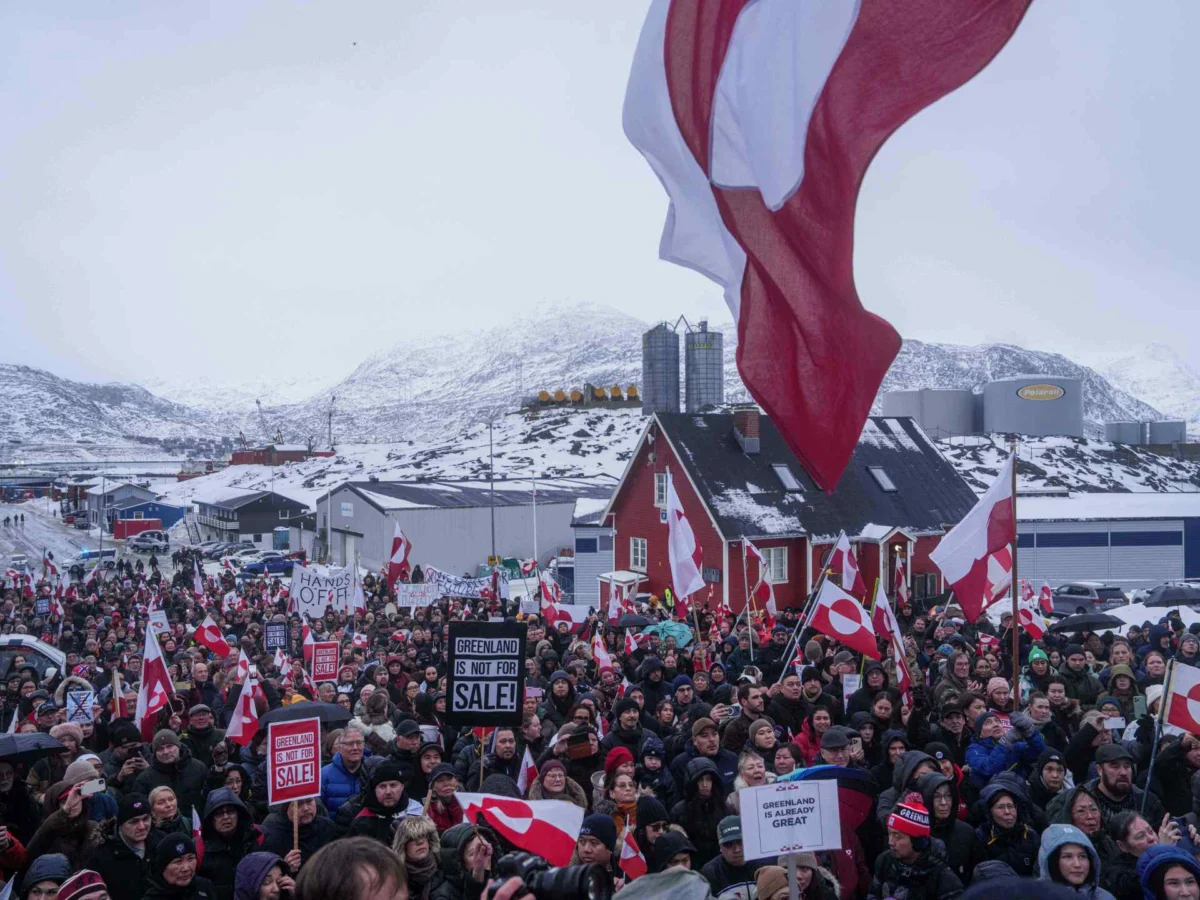
LEDE
Denmark says a binding US Greenland deal will not compromise Denmark’s sovereignty, addressing concerns over US interest in the island.
The statement comes as the United States, under President Donald Trump, has expressed interest in securing a strategic presence in Greenland, citing the island’s growing importance in the Arctic as climate change reshapes regional geopolitics.
The Arctic is increasingly seen as a region of strategic competition due to melting ice opening new shipping routes and access to natural resources.
KEY FACTS
- Denmark says a US Greenland deal will be binding.
- Denmark says the deal will not compromise its sovereignty.
- Trump has sought a US foothold in Greenland.
- Greenland’s strategic value is rising due to Arctic warming.
WHAT HAPPENS NEXT?
Denmark has indicated it will proceed with negotiations on a US Greenland deal, though details of the agreement remain unclear. The Arctic’s strategic importance has grown as global temperatures rise and ice cover recedes, creating potential for new trade routes and resource extraction opportunities. Analysts note that any formal arrangement would require careful navigation of Greenland’s autonomous status within the Kingdom of Denmark.
Greenland operates with a significant degree of self-governance, though foreign policy and defense remain under Danish control. A binding US Greenland deal would likely involve discussions with both Copenhagen and Nuuk, the island’s capital. The strategic interest reflects broader international attention on the Arctic, where several nations are expanding their presence.
Security concerns, economic opportunities, and environmental considerations are expected to shape the contours of any potential agreement. Neither the US nor Denmark has released specifics about the scope or terms of the proposed deal at this time.
HOW DID WE GET HERE?
President Trump’s interest in Greenland has been public for years, driven by the island’s location between North America and Europe and its potential strategic value. The Arctic is warming at more than twice the global average rate, accelerating ice loss and raising questions about future access to the region. As sea ice diminishes, the Northern Sea Route and other passages are becoming more viable for commercial shipping, increasing geopolitical interest.
Greenland, the world’s largest island, is an autonomous territory within the Kingdom of Denmark. It has a population of around 56,000 people, mostly Inuit. Despite its size, Greenland holds significant untapped mineral and hydrocarbon resources, making it a focal point for international economic and strategic planning in the region.
Past US administrations have maintained a military presence in Greenland, primarily through the Thule Air Base. However, the suggestion of a more permanent or expanded role has raised questions about Greenland’s future relationship with both Denmark and the United States.
WHO IS AFFECTED?
The proposed US Greenland deal would directly affect Denmark and Greenland, which together form the Kingdom of Denmark. Denmark retains responsibility for foreign affairs, defense, and nuclear policy, while Greenland governs most domestic affairs. Any formal agreement would need to account for Greenland’s autonomy under the Self-Government Act of 2009.
Greenland’s citizens may see increased economic or infrastructure investment if a US Greenland deal includes development provisions. At the same time, concerns about environmental protection and cultural preservation could arise if new projects are introduced without sufficient consultation. The Greenlandic government has historically emphasized sustainable development aligned with Inuit values and Arctic stewardship.
Other Arctic nations, including Canada, Russia, and Norway, may also closely monitor developments. The US Greenland deal could influence regional security arrangements and alter the strategic balance in the Arctic, affecting broader diplomatic and military partnerships in the area.
WHAT WE KNOW — AND WHAT WE DON’T
Verified by the source:
- Denmark says the US Greenland deal will be binding.
- Denmark says the deal will not compromise sovereignty.
- Trump has wanted a US foothold in Greenland.
- Strategic competition in the warming Arctic is increasing.
Still unconfirmed:
- No specific terms or timeline for the US Greenland deal have been disclosed.
- No official comments from the US government or Greenlandic authorities.
- No details on the scope, investment levels, or access rights involved.
WHY IT MATTERS
The Arctic is emerging as a key region for global security, trade, and resource access as climate change transforms the landscape. A US Greenland deal could shift strategic dynamics, especially in light of growing international interest in the region’s future.
WHAT TO WATCH
Further statements from US or Danish officials could clarify the scope of the US Greenland deal. Details on negotiations are expected to emerge in the coming weeks as Arctic geopolitics evolve.
Geopolitics updates | Climate and environment coverage
Denmark confirms a binding US Greenland deal will not compromise sovereignty as Arctic interest intensifies.