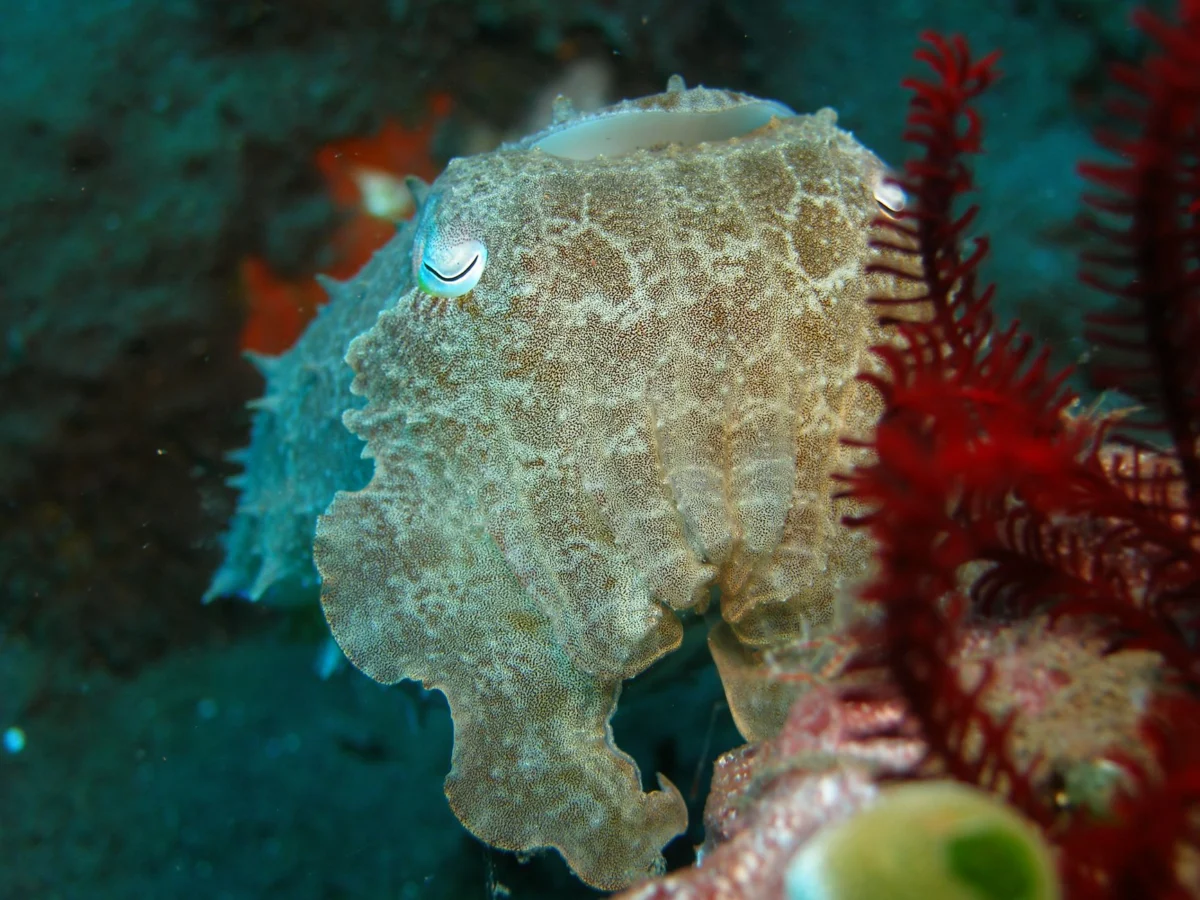
Scientists are studying cuttlefish camouflage to understand how the brain controls this complex biological process. Cephalopods, including cuttlefish, are known for their sophisticated ability to blend into their surroundings, but researchers are working to decode the neural mechanisms behind it.
The research centers on how the brain orchestrates the rapid color and pattern changes that allow these creatures to hide from predators or approach prey. While the general phenomenon is well documented, the precise neural pathways and control systems remain under investigation.
Key Facts
- Scientists are researching cuttlefish camouflage mechanisms.
- Cephalopods, including cuttlefish, are masters of camouflage.
- The focus is on how the process works in the brain.
- Research is ongoing to decode neural control systems.
The Science Behind Cuttlefish Camouflage
Cuttlefish are cephalopods, a class of mollusks that also includes octopuses and squids. These animals possess specialized cells called chromatophores, iridophores, and leucophores that allow them to change color, pattern, and texture rapidly. This ability serves multiple purposes: avoiding predators, communicating with other cuttlefish, and ambushing prey.
Unlike animals that rely on slow pigment changes like chameleons, cuttlefish can shift their appearance in milliseconds. The skin contains millions of chromatophores, each controlled by tiny muscles connected directly to the nervous system. When the brain sends signals, these muscles expand or contract, revealing different colors beneath the skin surface.
Scientists are particularly interested in the neural circuitry that enables such precise, rapid control. The brain must process visual information, compare it to the surrounding environment, and then send motor commands to hundreds of thousands of chromatophores simultaneously. Understanding this process could inspire advances in soft robotics, adaptive materials, and artificial camouflage technologies.
How Did We Get Here?
Research into cephalopod camouflage has evolved significantly over the past century. Early observations by naturalists noted the animal’s ability to match its surroundings, but the underlying biological mechanisms were unclear. As neuroscience advanced, researchers began mapping neural pathways in simpler organisms, eventually turning attention to cephalopods due to their unique capabilities.
Modern neurobiology techniques, including live imaging and genetic analysis, now allow scientists to observe neural activity in real time. Cuttlefish are ideal subjects because their nervous systems are relatively accessible and their camouflage responses are highly predictable. Researchers can present controlled visual stimuli and monitor corresponding brain and skin reactions.
Despite these advances, many questions persist. How does the brain integrate multiple sensory inputs to generate appropriate camouflage patterns? What genetic factors influence individual variation in camouflage effectiveness? Answering these requires continued experimentation and interdisciplinary collaboration between biologists, engineers, and computer scientists.
What We Know — and What We Don’t
Verified by the source:
- Scientists are actively studying cuttlefish camouflage mechanisms.
- Cephalopods are recognized as masters of camouflage.
- The investigation focuses on brain-based control of the process.
Still unconfirmed:
- The exact neural pathways responsible for camouflage control.
- The role of specific genes in camouflage ability.
- Potential applications of this research in technology.
Why It Matters
Understanding how cuttlefish achieve their remarkable camouflage abilities has broader implications for biology, engineering, and technology. Insights into neural control systems could inform the development of adaptive materials, autonomous robots, and medical devices. Additionally, studying these creatures deepens our understanding of evolution and sensory processing in marine life. This research contributes to the growing field of bio-inspired design, where nature provides blueprints for human innovation.
What To Watch
Future studies may reveal new details about the genetic and neural basis of cuttlefish camouflage. Researchers have yet to publish comprehensive findings on the specific brain regions involved. As technology improves, real-time monitoring of neural activity during camouflage responses may soon become possible. Updates will emerge as peer-reviewed studies are published in scientific journals. For now, the exact mechanisms behind cuttlefish camouflage remain an active area of exploration. Scientists continue decoding how cuttlefish brains control camouflage through real-time neural monitoring and behavioral studies.