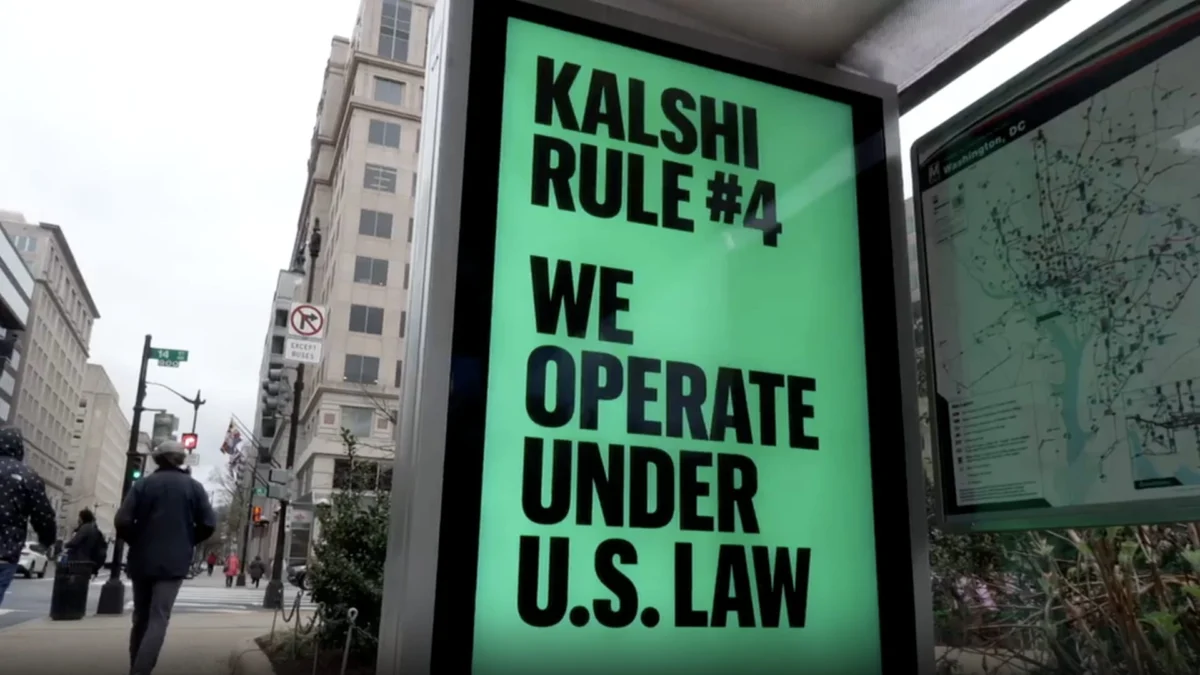
A federal appeals court ruling has set the stage for a potential Supreme Court showdown over the legality of prediction markets. The decision specifically addresses whether sports-related event contracts qualify as swaps under financial regulations.
The 9th U.S. Circuit Court of Appeals recently ruled that these contracts do not constitute swaps, directly contradicting an April ruling from the 3rd Circuit. This circuit split creates uncertainty about how prediction markets should be regulated and increases the likelihood of Supreme Court intervention to resolve the conflicting interpretations.
KEY FACTS
- The 9th U.S. Circuit Court ruled against classifying sports-related event contracts as swaps
- This contradicts a 3rd Circuit ruling from April 2026
- The conflicting rulings may lead to Supreme Court review
WHAT THIS LEGAL BATTLE MEANS
The core issue revolves around how regulators should treat contracts tied to future sporting events – whether they should be classified as financial swaps subject to strict oversight under Dodd-Frank regulations. Circuit courts have now reached directly opposing conclusions on this question, creating a classic case for Supreme Court resolution.
Prediction markets allow participants to trade contracts based on the outcomes of future events, including sporting competitions, elections and entertainment awards. Their legal status has remained in a gray area for years, with different regulatory agencies taking varied approaches to oversight.
WHAT HAPPENS NEXT?
With two federal appeals courts now in direct conflict over this regulatory question, legal experts suggest the Supreme Court is more likely to take the case to resolve the split. The Court typically intervenes when lower courts reach contradictory interpretations of federal law.
The timing of any potential Supreme Court action remains uncertain. The losing party in the 9th Circuit case could first request an en banc review by the full circuit before potentially appealing to the higher court.
WHAT WE KNOW — AND WHAT WE DON’T
Verified by the source:
- The 9th Circuit issued a ruling on sports-related event contracts
- This contradicts a previous 3rd Circuit decision
Still unconfirmed:
- Whether Supreme Court justices will agree to hear the case
- How this affects non-sports prediction markets
- The timeline for any appeals process
WHY IT MATTERS
This legal uncertainty impacts multiple industries that rely on prediction markets, from financial services to media companies. The Supreme Court’s eventual decision could either open the door to broader use of these markets or impose significant new regulatory burdens.
WHAT TO WATCH
Legal observers will monitor whether the losing party in this case petitions the Supreme Court for review, which could take months to process. The Court typically announces decisions about whether to accept such cases in its fall conference.