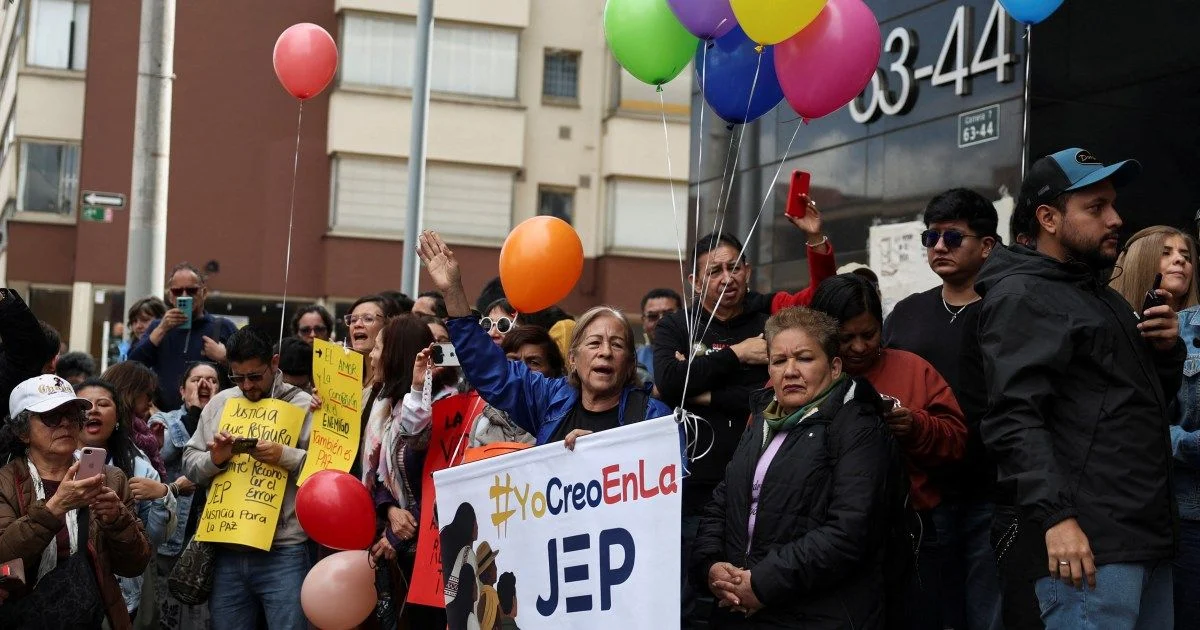
Colombia’s president plans to slash spending on a transitional justice court, a move that war crimes victims say threatens a key human rights court and its ability to deliver justice. The proposed cuts target a court established to investigate and prosecute serious violations committed during the country’s decades-long internal conflict. Victims fear the reduced funding could limit the court’s capacity to function, weakening efforts to ensure accountability for atrocities. The plan highlights growing tension between the government and institutions tasked with transitional justice, as concerns mount over the court’s sustainability and independence.
The transitional justice court was created as part of Colombia’s 2016 peace agreement with the Revolutionary Forces of Colombia, aiming to provide a path for truth, justice, and reparations for victims of the conflict. Its mandate includes investigating war crimes and grave human rights violations, offering reduced sentences to perpetrators who fully confess their crimes. Cuts to its budget could slow investigations and reduce support for victims seeking answers about disappeared relatives or survivors of torture and mass violence. Victims’ groups have warned that defunding the court risks reversing progress on accountability and leaving thousands without access to legal redress.
Alvaro “”, a constitutional law expert, noted that the court’s role extends beyond prosecution, serving as a symbol of reconciliation for communities affected by decades of violence. Critics of the cuts argue that undermining the institution may embolden impunity and damage Colombia’s international standing on human rights. The government has not yet detailed how the proposed reductions would be implemented or what alternative mechanisms might replace the court’s functions.
What happens next depends on whether the budget proposal gains legislative approval, and whether domestic and international pressure influences the final allocation of funds for the transitional justice court.
Key Facts:
- Colombia’s president plans to slash spending on a transitional justice court.
- War crimes victims fear the cost of reduced funding for the court.
- The court was established to investigate war crimes and human rights violations.
What We Know — and What We Don’t:
Verified by the source:
- Colombia’s president plans to cut funding for a transitional justice court.
- Victims of war crimes express concern over the impact of these cuts.
- The court plays a role in investigating human rights violations from the conflict.
Still unconfirmed:
Why It Matters
The proposed cuts to Colombia’s transitional justice court come at a critical juncture in the nation’s post-conflict recovery. With thousands still seeking justice for atrocities committed during the conflict, weakening the institutions designed to address these crimes risks undermining both reconciliation and the rule of law. For victims and survivors, the court represents one of the few avenues for truth and accountability; its defunding could leave a lasting void in Colombia’s commitment to human rights and transitional justice.
What To Watch
Watch for updates on whether the proposed budget cuts are approved by Congress and how victims’ groups and international observers respond. Learn more about developments in geopolitics and conflict through our war and geopolitics coverage, or follow evolving dynamics in governance via our politics section.