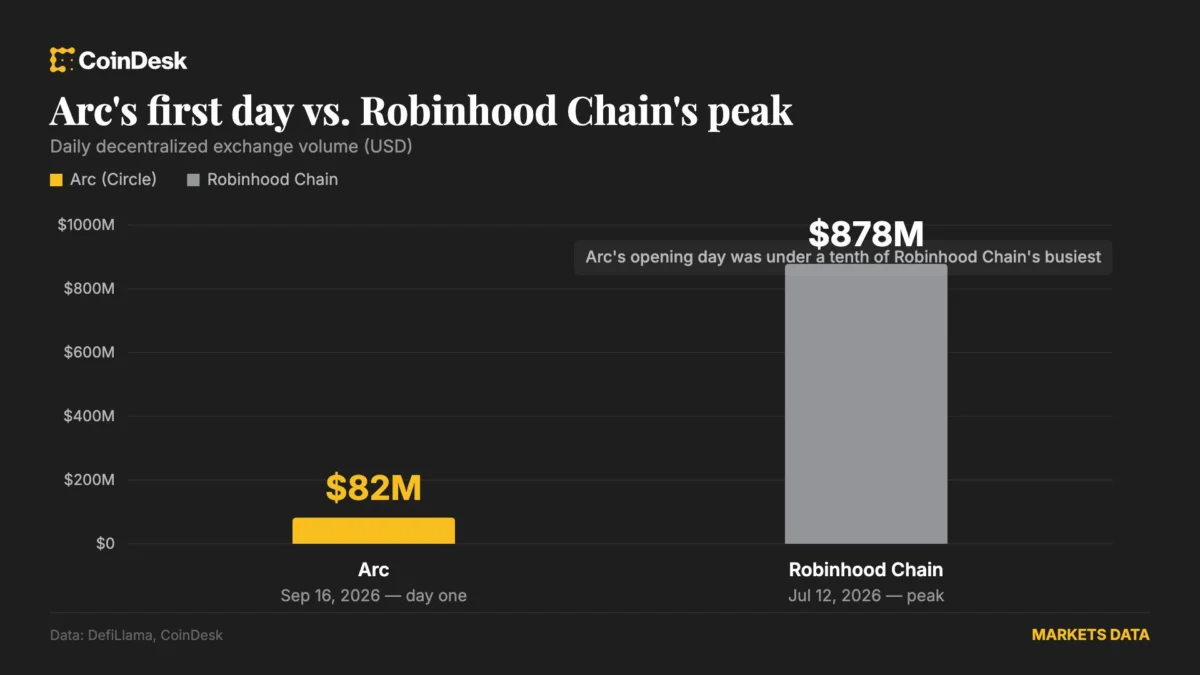
On its first day of operation, the Circle Arc blockchain was overwhelmed by memecoin trading rather than institutional or stablecoin usage. The traders behind these memecoins had already exited the network by Thursday morning, suggesting a flash-in-the-pan phenomenon rather than sustained adoption.
The launch of Circle Arc, a Layer 2 blockchain backed by BlackRock, was intended to support institutional finance, but the immediate influx of memecoins highlighted the difficulty of controlling decentralized ecosystems once they go live.
KEY FACTS
- Circle Arc blockchain launched with institutional backing from BlackRock.
- On its first day, the network was dominated by meme-based digital assets.
- Traders using memecoins had moved on from the network by Thursday morning.
- The activity contrasted with the platform’s intended institutional focus.
- The memecoin surge reflected broader trends in decentralized finance ecosystems.
THE STORY
What is Circle Arc?
Circle Arc is a Layer 2 blockchain developed by Circle, the company behind the USD Coin (USDC) stablecoin. It was launched as an institutional-grade platform designed to settle transactions at scale while maintaining compatibility with Ethereum-based tools. The blockchain received backing from major financial firms including BlackRock, positioning it as a bridge between traditional finance and cryptocurrency markets.
Despite these credentials, the network experienced an unexpected explosion of memecoin activity on its opening day. Memecoins are typically low-value tokens built on hype and social media trends rather than utility or long-term economic models. Their rapid rise often disrupts networks not designed to handle speculative surges.
How did memecoins take over so quickly?
The exact mechanisms behind the dominance of memecoins on Circle Arc remain unreported in detail. However, analysts familiar with decentralized finance ecosystems note that new blockchains often attract speculative traders looking to deploy tokens cheaply and rapidly. These traders frequently use automated bots and liquidity pools to create short-lived trading volumes before shifting attention to newer platforms.
The fact that Circle Arc was publicly accessible upon launch likely contributed to the ease with which memecoins were created and traded. Unlike permissioned systems where access is restricted, open networks allow anyone to mint or list tokens without prior approval. This freedom enables viral behavior but also makes it difficult for platforms to enforce intended usage policies.
What happens next for Circle Arc?
With the initial wave of memecoin traders having already exited, Circle now faces the challenge of attracting genuine institutional users to its blockchain. Whether the platform can pivot toward its original mission remains uncertain. No official statements have confirmed future steps or changes in strategy.
What We Know — and What We Don’t
Verified by the source:
- The Circle Arc blockchain launched with support from BlackRock.
- Memecoins dominated activity on the blockchain’s first day.
- Traders involved in memecoins had left the network by Thursday morning.
Still unconfirmed:
- The specific memecoins involved in the surge.
- The total value or volume of memecoin transactions.
- Whether Circle will implement restrictions on token creation.
- Official responses from Circle regarding the incident.
- Long-term impact on institutional adoption of the platform.
WHY IT MATTERS
The dominance of memecoins on Circle Arc underscores a recurring tension in blockchain design: balancing openness and control. While decentralized platforms thrive on permissionless innovation, institutional investors often seek predictable and stable environments. If newer blockchains repeatedly fall victim to speculative mania instead of serious financial activity, they risk undermining trust among enterprise participants.
WHAT TO WATCH
Observers will be watching whether Circle introduces new measures to steer usage toward institutional applications. Official comments from Circle or updates about platform modifications could signal how seriously the company is taking this early setback. A CoinDesk report confirmed that Circle Arc launched as a corporate Layer 2 backed by BlackRock but saw immediate redirection toward memecoin trading.