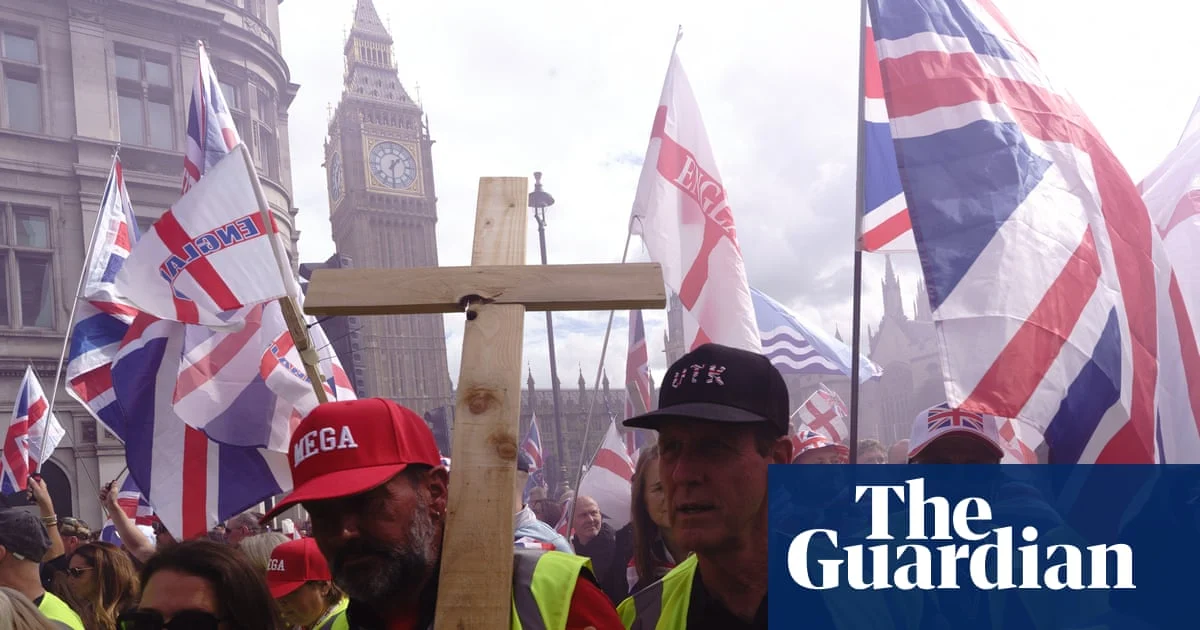
London-based thinktank Theos says Christian nationalism in Britain is being driven largely by people who rarely attend church and are more focused on defending the country’s Christian heritage than on personal faith.
The report identifies five distinct groups in the UK whose attitudes toward Christianity and Britishness reveal how nationalist sentiment can take religious form even among infrequent worshippers. It challenges the idea that greater visibility of crosses and Christian symbols in public life reflects a broad return to orthodox Christian practice.
Key Facts
- Christian nationalism in Britain is driven by people who rarely attend church.
- These individuals are more concerned with defending Christian heritage than practicing faith.
- The research was produced by the thinktank Theos.
- A survey identified five different groups based on attitudes toward Christianity and Britishness.
- The report challenges the notion that visible Christian symbols reflect a Christian revival.
Who Is Affected
The findings speak to broader tensions in British society between secular governance, religious identity, and national belonging. Theos says its survey uncovered five distinct groups, though it does not name them in detail. Each group blends varying degrees of Christian identification, national pride, and views on immigration or cultural change. People who identify culturally as Christian but rarely attend services may still feel protective of traditional symbols and narratives. This dynamic complicates efforts by mainstream churches to speak for all Christians, since many active churchgoers hold different political views.
Public debates over prayers in council meetings, holiday displays, and historical statues often reflect these tensions. Supporters argue such symbols preserve national identity, while critics say they exclude non-Christian residents. Theos notes that concern over Christian heritage does not necessarily lead to extremism, but it can fuel polarization in communities experiencing demographic shifts.
What Happens Next
Theos plans to publish further breakdowns of the five groups in coming months. Analysts say the report adds nuance to discussions ahead of local elections and potential changes to laws governing religion in public spaces. Policymakers are already weighing whether to expand guidance on Christian symbols in schools and council buildings. Some faith leaders are calling for dialogue rather than division, urging churches to engage with both practicing members and cultural Christians who value tradition.
Academic interest in Christian nationalism has grown across Europe and North America. Researchers note that similar patterns appear in other Western democracies, where declining attendance coexists with strong cultural attachment to religious identity. Theos emphasizes that its work aims to inform honest conversation—not to label entire groups as problematic.
What We Know — and What We Don’t
Verified by the source:
- A report by Theos studied Christian nationalism in Britain.
- People driving it rarely attend church.
- They focus on defending Christian heritage.
- The report identifies five groups surveyed on Christianity and Britishness.
Still unconfirmed:
- Names or descriptions of the five groups.
- Survey sample size or methodology details.
- Specific policies influenced by the findings.
- Whether any political leaders responded officially.
Why It Matters
Understanding who drives Christian nationalism helps voters, journalists, and officials distinguish between personal faith and cultural identity. In an era of rising populism, misreading religious symbolism can distort coverage of legitimate concerns and amplify divisions. This research offers clarity for informed civic discourse across war-geopolitics and domestic politics.
For readers following war-geopolitics trends, this story illustrates how identity plays out within stable democracies—even without conflict or foreign influence.
What To Watch
Future releases from Theos may provide clearer definitions of each group and how their views correlate with voting behavior. Official responses from government bodies overseeing public expressions of faith will also shape next steps.