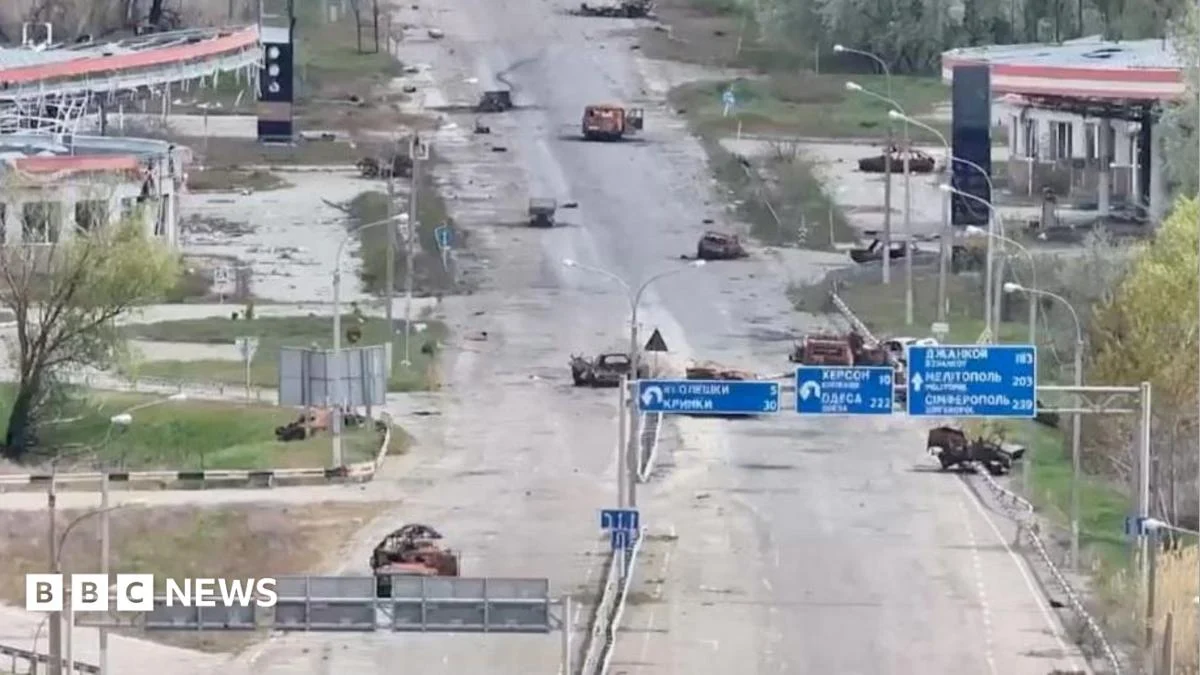
A kherson region ceasefire agreed to assist stranded residents of Oleshky has been extended, with both Russia and Ukraine reporting no breaches. The truce, initially intended to help civilians trapped in the area, remains in effect under the monitoring of officials from both sides.
The extension comes after the original agreement, which focused on the civilian population of Oleshky, a city located in the Kherson region. Neither party has publicly disclosed specific details about the terms or mechanisms behind the extension, but officials have confirmed its continuation.
Key Facts
- Ceasefire extended across Ukraine’s Kherson region, officials say.
- Original truce intended for stranded residents of Oleshky.
- Russia and Ukraine report no breaches of the ceasefire.
What happens next?
The future of the kherson region ceasefire depends on continued cooperation between Russian and Ukrainian officials. So far, both sides have claimed adherence to the agreement, at least in the form of no reported breaches. However, the underlying conflict remains unresolved, and tensions persist in other parts of the region.
Oleshky, a key focal point of the initial truce, continues to face challenges related to access and humanitarian conditions. While the temporary pause in hostilities may ease immediate pressures on residents, long-term stability is uncertain. The international community is likely watching for signs of broader de-escalation or further negotiation efforts.
Humanitarian corridors, if maintained, could allow for the delivery of essential supplies and medical aid. Yet, without verified data or third-party oversight, confirming the real-time status of such operations remains difficult. The local population, caught between military lines, remains the most vulnerable group affected by the ongoing instability.
How did we get here?
The current kherson region ceasefire traces back to a localized truce aimed at assisting stranded residents of Oleshky. This arrangement was not part of any broader peace process but rather a tactical pause intended to prevent harm to civilians trapped in the area.
Both Russia and Ukraine have acknowledged the temporary nature of the agreement. The lack of independent verification means much of what is known relies on statements from officials aligned with each side. Despite limited transparency, the absence of reported breaches suggests a degree of restraint, at least for now.
Regional analysts note that localized truces often reflect pragmatic considerations rather than ideological shifts. Whether this kherson region ceasefire will hold depends on factors beyond the control of either government, including military developments and diplomatic initiatives.
What We Know — and What We Don’t
Verified by the source:
- The ceasefire has been extended in the Kherson region.
- The truce was originally planned for residents of Oleshky.
- No breaches of the ceasefire have been reported by either side.
Still unconfirmed:
- The specific terms and duration of the extension remain unclear.
- Independent verification of compliance has not been reported.
- Details about humanitarian conditions in Oleshky are not available.
Why It Matters
The extension of a kherson region ceasefire, even temporarily, highlights the potential for localized de-escalation in active conflict zones. For residents caught in areas like Oleshky, such pauses can mean the difference between life and death, offering a fragile window for safety and survival.
While the immediate impact may be limited, such developments often precede larger diplomatic movements. International observers and humanitarian organizations continue to advocate for expanded protections and verified access to affected populations.
What To Watch
Officials have not announced a fixed timeline for the extension. Monitoring reports from independent sources will be key to confirming whether the truce holds beyond its current scope.