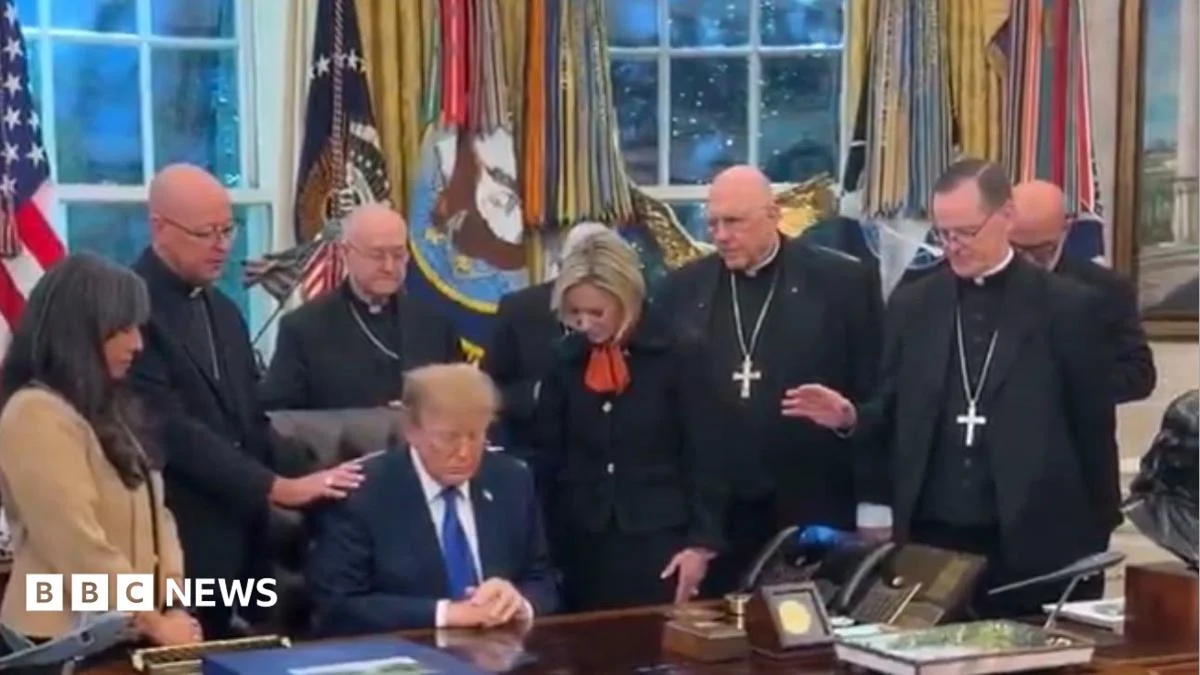
Catholic bishops have apologized following public scrutiny over images showing them praying with former U.S. president Donald Trump, clarifying that they believed the meeting was intended to be private. The apology comes after the prayer session sparked controversy, raising questions about the role of religious leaders in political settings.
The bishops’ statement underscores a growing tension between religious figures and political leaders, particularly in high-profile events captured in public view. As more details emerge, observers are asking how such meetings are arranged and what implications they carry for church-state dynamics.
KEY FACTS
- Two bishops appeared in images praying with Donald Trump.
- The bishops later apologized, stating they believed the meeting was private.
- The controversy stemmed from public release of the prayer images.
- The incident occurred during a documented Trump meeting with religious leaders.
Why the Trump prayer meeting drew attention
Images of the bishops praying alongside Donald Trump circulated widely, prompting reactions from both supporters and critics. Religious leaders often engage in private prayer with political figures, but when such moments become public, they can be interpreted in various ways. The bishops emphasized that the prayer session was not meant for public consumption and expressed regret over any misunderstanding.
The meeting reflects a broader pattern of Trump’s outreach to faith communities during his presidency and afterward. Religious gatherings, especially those involving political leaders, frequently invite scrutiny regarding their purpose and transparency.
How did we get here?
The Trump prayer meeting was part of a series of events where religious leaders have interacted closely with political figures. While these interactions are often routine behind closed doors, the public release of images can shift perception. The bishops’ apology highlights the sensitivity around such encounters when they enter the public discourse.
Observers note that the intersection of religion and politics remains a delicate balance, particularly when moments intended to be personal are captured and shared beyond their original context. The Vatican has previously cautioned against politicizing faith, adding another layer to the discussion.
Who is affected by the controversy?
Besides the two bishops directly involved, the incident affects religious institutions and political actors who navigate public appearances together. It also informs how future meetings between clergy and politicians might be managed or photographed.
Public trust in religious leadership may hinge on how transparently such meetings are handled moving forward. The bishops’ apology aims to restore clarity about the private nature of their intentions.
WHAT WE KNOW — AND WHAT WE DON’T
Verified by the source:
- Two bishops prayed with Donald Trump in a meeting depicted in public images.
- The bishops apologized, saying they believed the meeting was private.
- The apology followed public circulation of the prayer images.
- The source describes the event as a meeting involving Trump and religious figures.
Still unconfirmed:
- The names or titles of the specific bishops involved.
- The time, date, or location of the Trump prayer meeting.
- Whether Trump or his team arranged the meeting intentionally for public display.
- Any official response from the Trump organization or the Vatican.
WHY IT MATTERS
The Trump prayer meeting controversy illustrates the ongoing challenges in separating religious practice from political influence, especially when moments meant to be personal become public spectacle. For voters, faith communities, and political observers, these interactions shape perceptions of sincerity and agenda-setting in democratic discourse.
WHAT TO WATCH
Further developments may include additional statements from religious authorities or the Trump team. The incident could also influence future protocols around photography and privacy at religious-political gatherings.