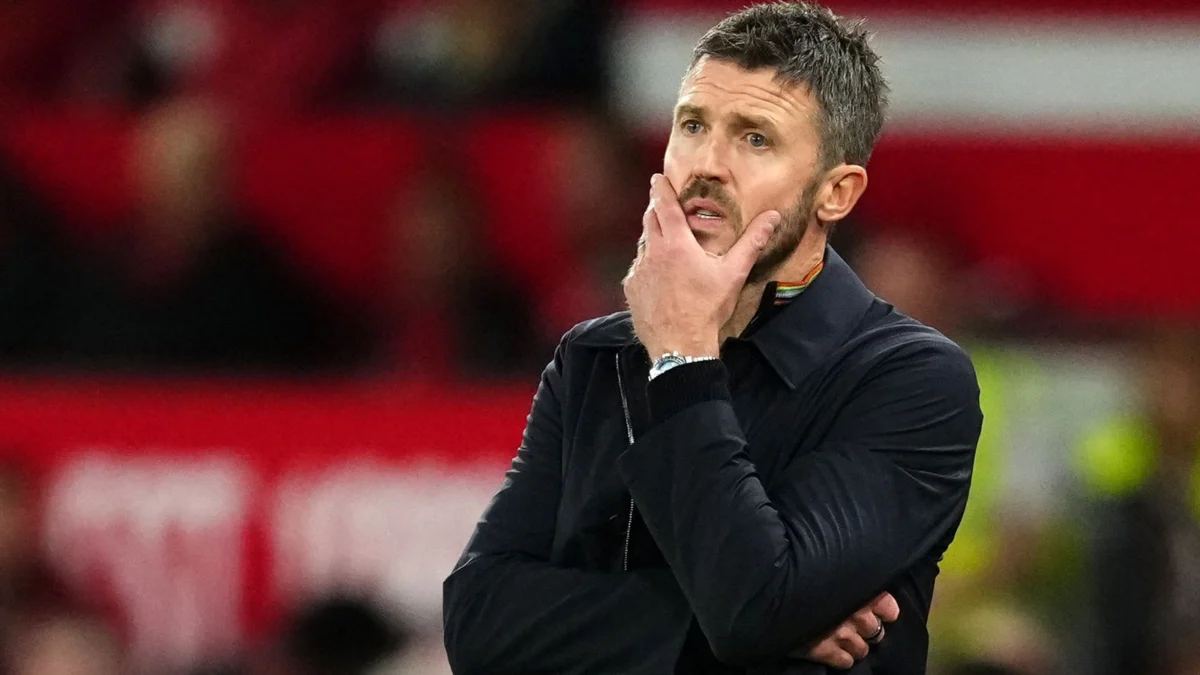
New season, same story. Manchester United’s latest setback — a 2-3 home loss to Brighton — has intensified pressure on Michael Carrick, whose early tenure at Old Trafford mirrors past failures. Even Carrick acknowledges the troubling pattern, suggesting deeper systemic issues at the club.
This wasn’t just a defeat. It wasn’t just a collapse. It wasn’t just a cup exit. Another Manchester United managerial project appears to be heading in that same, predictable direction.
Key Facts
- Michael Carrick is under increasing pressure as Manchester United manager.
- The Red Devils lost 2-3 to Brighton at Old Trafford.
- The defeat marks another chapter in a familiar managerial struggle.
- Carrick himself recognizes the recurring nature of the issues.
- The club exited the competition amid criticism.
What Happens Next?
Carrick’s position remains precarious. With only a short time in charge, the weight of expectation and historical underperformance looms heavily. The club’s hierarchy may soon face questions about whether another change is needed to break the cycle of instability.
Brighton’s win underscores United’s ongoing difficulties in converting dominance into results. Despite significant investment in talent, the team continues to lack consistency — a trend that has plagued the club across multiple managerial regimes. Whether Carrick can reverse this trajectory remains unclear, but time is running out.
Off the pitch, speculation grows around potential replacements. Names linked include former favorites and emerging candidates. However, without concrete action from the board, uncertainty will persist — affecting player morale and fan confidence alike.
Understanding the Pattern
Manchester United’s revolving door of managers has become a defining feature of recent years. From Jose Mourinho to Erik ten Hag to now Carrick, each appointment promised renewal but delivered mixed outcomes. The underlying causes — including boardroom decisions, recruitment missteps, and cultural challenges — remain unresolved.
Carrick inherited a squad rich in individual talent yet lacking cohesion. His transition from player to manager comes with high hopes, but also immense scrutiny. Early defeats fuel doubts about his readiness for such a demanding role.
The loss to Brighton adds momentum to critics who argue the club needs more than tactical tweaks. Structural reform — perhaps in leadership structure or ownership approach — might be necessary to restore long-term success.
Who Is Affected?
Players bear the brunt of fan frustration, especially younger talents expected to carry the team forward. Established stars face increased pressure to perform while adapting to shifting strategies under new leadership.
Fans worldwide watch helplessly as hopes rise and fall with each matchday. Their loyalty endures despite repeated disappointments — yet patience wears thin when progress stalls season after season.
Sponsors and commercial partners also feel the ripple effects. A struggling United means fewer global headlines and less marketing value — impacting revenue streams crucial to funding future investments.
What We Know — and What We Don’t
Verified by the source:
- Carrick acknowledges the recurring struggles at Manchester United.
- United lost 2-3 to Brighton at Old Trafford.
- The defeat marks another difficult moment in Carrick’s tenure.
Still unconfirmed:
- Exact timeline or conditions under which Carrick might leave.
- Specific internal reactions from the club’s board.
- Confirmed list of potential successor candidates.
Why It Matters
These recurring cycles reflect broader concerns within English football about sustainable growth versus short-term fixes. For fans and stakeholders, understanding these dynamics matters not only for sport but for how organizations handle legacy, change, and accountability.
What To Watch
Future matches will reveal whether Carrick can stabilize the team or if further changes loom. Official statements from the club are awaited regarding any shifts in strategy or personnel.