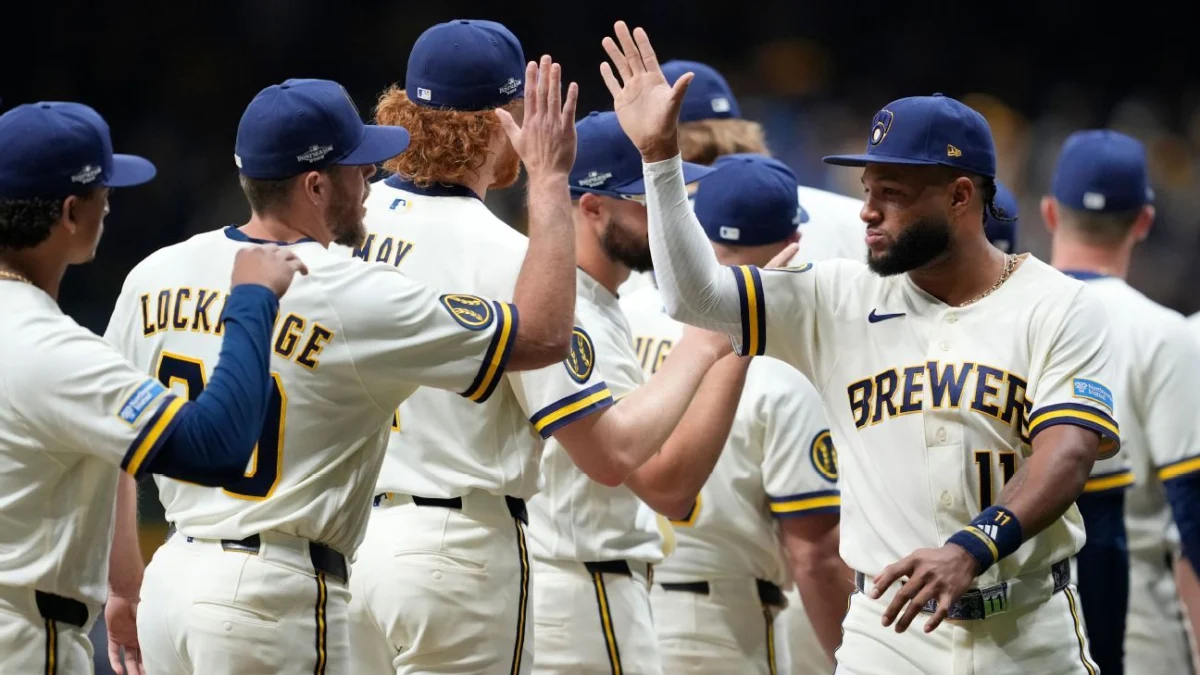
The Milwaukee Brewers enter the 2026 MLB postseason facing recurring questions about their offense, particularly a lack of power that has undermined past October hopes, but their current path differs from previous years.
This season’s Brewers rely on pitching depth and situational hitting rather than home-run volume, raising debate over whether that formula can survive a high-stakes playoff series where offensive firepower typically matters most.
Key Facts
- The Brewers’ lack of power has previously hurt their World Series chances.
- This year’s Brewers are taking a different approach to reach the postseason.
- Questions remain whether that approach can overcome the power deficit in October.
What happens next?
The Brewers’ playoff trajectory will likely depend on whether their pitching staff can neutralize opposing lineups in short series, and whether their situational offense can generate enough runs against elite pitching.
Past Brewers clubs leaned heavily on homers, which worked in the regular season but stalled in the postseason. Their current model emphasizes pitch efficiency, bullpen usage, and small-ball tactics like bunting, baserunning, and high-contact, line-drive hitting.
MLB data consistently shows that low-power teams face steep odds in the playoffs unless their pitching is exceptional. The Breers’ staff ERA ranks among the top 10, but playoff opponents average elevated offensive production, making run support critical.
How did we get here?
Milwaukee’s farm system prioritized pitching and defense over power bats, which the organization believed would offer more consistent wins in a short playoff format. Their regular-season success supports this, but skeptics argue that playoff baseball rewards teams that can explode for multiple runs in a single inning.
Analysts note that while pitching prevents losses, scoring runs remains essential when facing starters who can shut down low-power lineups. The Brewers’ front office has acknowledged the power gap but insists their approach maximizes their strengths.
This philosophical divide mirrors similar debates in other sports, where traditional wisdom clashes with modern analytics. The Brewers’ outcome may influence how rebuilding teams approach roster construction in future seasons.
Who is affected?
If the Brewers succeed, it could validate their rebuild-around-pitching philosophy and encourage similar strategies across smaller-market clubs. A deep run might also boost fan confidence and local revenue in Milwaukee.
Conversely, a quick exit could reignite criticism of their reluctance to pursue high-profile sluggers, especially in a market where payroll limitations often constrain free-agent signings. Their fanbase has experienced playoff disappointment before, including near-misses tied to offensive droughts.
National media attention will intensify regardless of the result, shaping narratives around small-market survival and strategic patience. Other organizations may adjust their own plans based on what Milwaukee demonstrates or fails to achieve.
What We Know — and What We Don’t
Verified by the source:
- The Brewers are using a different approach to reach the postseason.
- A prior lack of power hurt their World Series chances.
- Questions remain whether the current approach will overcome past problems.
Still unconfirmed:
- Exact statistical ranking or comparison to other playoff teams.
- Specific names of players or coaches quoted on the strategy.
- Any confirmed timeline or prediction about playoff outcomes.
Why It Matters
The Brewers’ experiment with a low-power, pitching-heavy model reflects broader MLB trends favoring balanced rosters. How they perform in the 2026 playoffs could signal whether small-market teams can compete without major spending on offense, affecting league dynamics and revenue sharing discussions.
What To Watch
Early playoff games will show whether Milwaukee’s pitching staff can carry the team, or whether they’ll need to find offense to extend series beyond the first round.