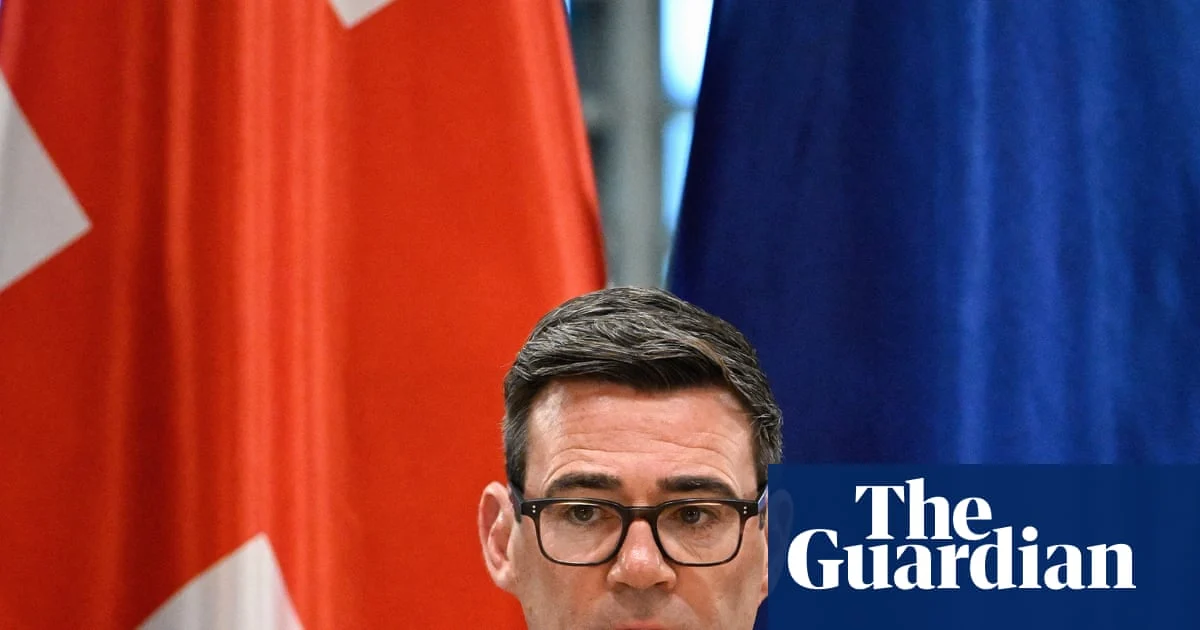
Andy Burnham, addressing his first day back after the party conference, urged a new direction for the UK by calling for closer ties with the EU, contrasting sharply with past Conservative and Labour approaches that treated Brexit as settled or burdensome.
His remarks came alongside assertions about foreign interference, suggesting a broader repositioning of UK foreign and domestic policy in the wake of years marked by political division.
Burnham’s statements signal a clear departure from predecessors who avoided revisiting Brexit or downplayed external threats, potentially reshaping how the UK engages with Europe and global powers alike.
Key Facts
- Andy Burnham called for closer ties with the EU, ending a decade of ‘drift and division’.
- He stated the Kremlin was ‘clearly’ involved in the 2016 Brexit vote.
- Burnham attributed RAF threats to Iran’s Islamic Revolutionary Guards Corps.
- A close adviser to Nigel Farage worked at a polling firm without disclosure.
- RJ Mitte, known for Breaking Bad, died at age 34.
The Story
What happens next?
Burnham’s call for closer ties with the EU introduces fresh momentum to a debate long avoided by mainstream parties. His framing of a ‘new chapter’ may pressure Keir Starmer’s Labour to clarify its stance, especially if public sentiment favors re-engagement.
EU officials have not yet responded, but any shift toward renewed alignment would require formal negotiations, regulatory adjustments, and likely electoral support.
Who is affected?
UK businesses and citizens stand to feel the impact of closer ties with the EU. Economists have noted that post-Brexit trade frictions raise costs and limit market access; re-engagement could ease some barriers.
European partners are watching closely, as UK participation affects everything from fishing rights to financial services cooperation. Meanwhile, voters who backed Brexit may view these moves as betrayals or pragmatic corrections.
How did we get here?
For over a decade, UK policy under Conservative rule emphasized sovereignty and disengagement from EU institutions. Labour under Starmer initially framed Brexit as irreversible history, avoiding promises of return.
Burnham’s intervention breaks that mold, possibly reflecting growing frustration with economic stagnation tied to Brexit. His position aligns more with pro-European voices seeking gradual reintegration rather than full reversal.
What We Know — and What We Don’t
Verified by the source:
- Burnham called for closer ties with the EU and ending years of division.
- He attributed Brexit interference to the Kremlin.
- He blamed Iran’s IRGC for RAF Fairford threats.
- A Nigel Farage adviser secretly worked at a polling firm.
- Zelenskyy pledged retaliation after Russian strikes on Ukraine’s grid.
Still unconfirmed:
- No independent verification of Russian interference claims.
- IRGC link to RAF threats not independently confirmed.
- No official response from EU or Kremlin.
- No details about polling firm or adviser identity.
- No confirmation of Netanyahu’s document prosecution orders.
Why It Matters
These developments highlight a potential turning point in UK politics, where once-taboo topics like EU reconciliation and foreign interference are entering public discourse. As political alignments evolve, so too might Britain’s role in Europe and on the global stage.
What To Watch
Watch for official responses from the EU and whether Burnham’s proposals gain traction in Parliament or among voters.
Continued escalation in Ukraine and Middle East tensions will also test how UK foreign policy adapts.