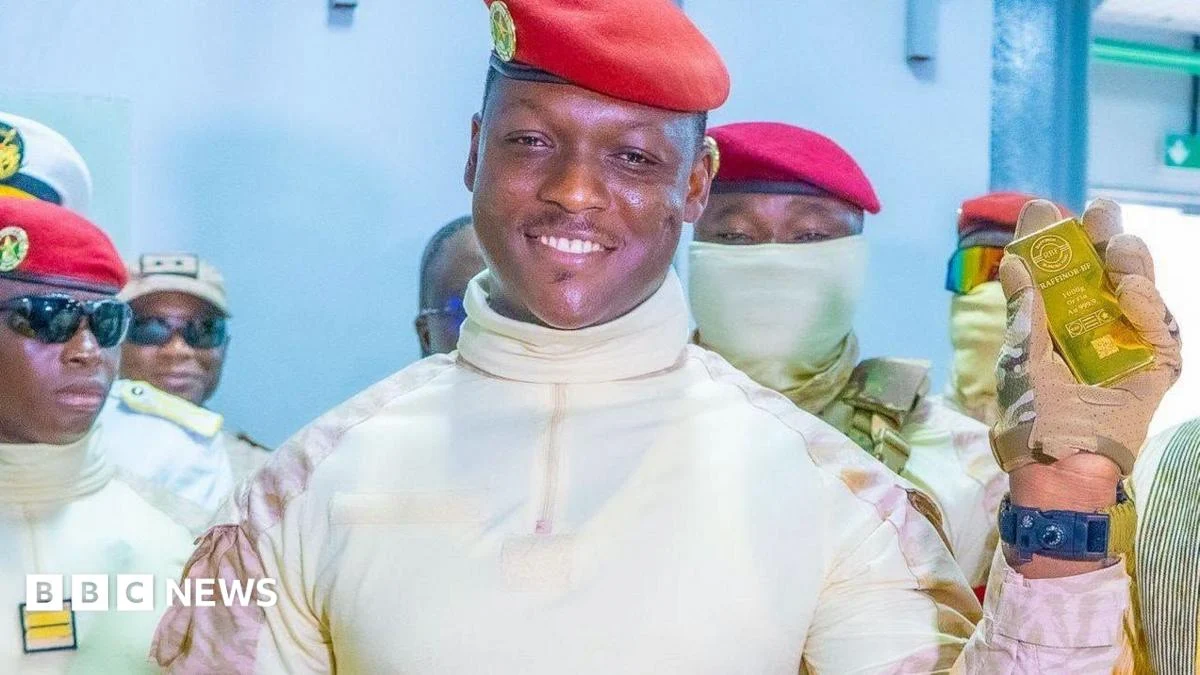
Burkina Faso’s military junta leader Ibrahim Traoré opened a major gold refinery as part of efforts to ensure the country profits more from its mineral wealth. The move reflects a broader push by the interim government to keep mining profits within national borders rather than exporting raw materials.
According to BBC News, the refinery is intended to strengthen domestic processing capacity, a step the junta says is necessary to capture greater economic value from gold extraction. Traoré has publicly expressed a desire to shift the balance of mineral revenue toward local ownership and state participation.
The facility represents one of the largest domestic gold refining projects in recent years and is being promoted as a symbol of economic sovereignty under the military-led administration.
KEY FACTS
- Junta leader: Ibrahim Traoré opened the gold refinery.
- Goal: Increase national profit from mineral wealth.
- Facility type: Major gold refinery launched.
- Source: Reported by BBC News.
- Category: War-geopolitics.
THE STORY
What happens next?
The success of the refinery will likely depend on whether it attracts sufficient feedstock from domestic mines and international suppliers willing to comply with new local content rules. Additional legislation may follow to mandate that a portion of extracted gold be processed locally before export. Observers will watch for signs of increased government revenue and whether foreign mining companies adjust their operations accordingly.
The project is also expected to create jobs in refining and logistics sectors, though the scale and distribution of employment remain unclear. Security conditions in mining regions could affect output and staffing, especially if unrest persists in border areas where artisan and industrial miners operate.
Who is affected?
The primary beneficiaries are expected to be the state and citizens if increased export duties or retained profits translate into public spending. Mining companies operating in Burkina Faso may face higher compliance costs or renegotiation of contracts to align with new industrial policies. Local communities near extraction sites could see changes in tax contributions and infrastructure investment linked to expanded refining activity.
Regional partners and investors monitoring West African mineral flows will also be impacted. Neighboring countries relying on re-exports throughBurkina Faso may need alternative transit routes, while global commodity traders will reassess supply chain dependencies tied to this newly integrated refining node.
How did we get here?
In recent years, several West African governments have moved to assert more control over extractive industries by requiring local processing and limiting raw ore exports. Burkina Faso, which produces significant volumes of gold annually, has experienced political instability since a 2022 coup d’état replaced the elected government with a military junta. Under Traoré’s leadership, resource nationalism has gained momentum alongside tighter regulation of foreign firms.
The decision to launch a major gold refinery aligns with regional trends emphasizing value addition at home. Prior administrations had largely relied on export revenues without substantial downstream beneficiation, prompting criticism about missed economic opportunities. This initiative appears designed to close that gap through strategic investment in domestic processing infrastructure.
WHAT WE KNOW — AND WHAT WE DON’T
Verified by the source:
- Junta leader Ibrahim Traoré opened a major gold refinery.
- The stated goal is to increase national profit from mineral wealth.
- The story was reported by BBC News.
Still unconfirmed:
- Exact location or capacity of the refinery.
- Timeline for full operational output.
- Names of contracted companies or foreign partners involved.
- Projected increase in state revenue from the facility.
WHY IT MATTERS
Governments across resource-rich regions are seeking stronger control over mineral revenues to fund development and reduce dependence on external markets. A successful domestic refinery could serve as a model for other nations aiming to industrialize their natural resource sectors. At the same time, abrupt policy shifts risk deterring investment and complicating long-term planning for both local and multinational stakeholders involved in mining supply chains.
WHAT TO WATCH
Future announcements regarding export restrictions, royalty adjustments, or expanded infrastructure projects should clarify the scope of implementation. Analysts expect policy responses from regional trade bodies and potential diplomatic reactions from countries whose firms operate mines in Burkina Faso. Monitoring official statements and legislative developments will provide clearer signals on sustainability of these reforms. War & Geopolitics and Economy & Markets coverage will continue tracking these dynamics.