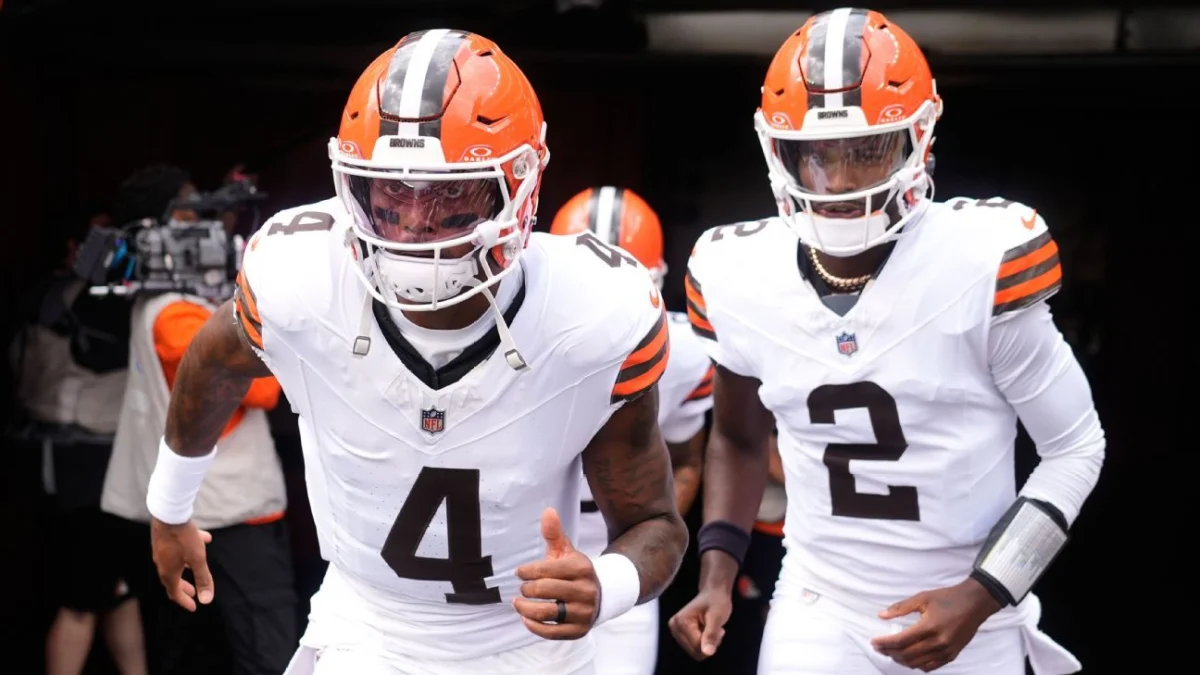
After Deshaun Watson’s difficult opening performance, the Cleveland Browns are set to evaluate their quarterback (QB) situation before Week 3 of the NFL season.
The team’s decision comes in the aftermath of their Week 2 matchup against the Tampa Bay Buccaneers, during which Watson’s play raised questions about potential adjustments under center.
This evaluation reflects the team’s commitment to making informed decisions at the most critical position in football.
KEY FACTS:
- The Browns will evaluate their QB situation after their Week 2 game.
- The evaluation follows Deshaun Watson’s rough performance in Week 2.
- The Buccaneers were the opposing team in the Week 2 matchup.
- The timing points toward a potential decision before Week 3.
- This is an organizational decision about a key position in football.
What happens next?
The Browns are expected to conduct their internal evaluation in the days leading up to their next scheduled game, which would be part of standard NFL practice when teams face questions at quarterback. While the exact process remains undisclosed, such evaluations typically involve coaching staff, front office personnel, and sometimes medical or analytical teams assessing both on-field performance metrics and overall team dynamics. In the broader context of the NFL, quarterback changes can significantly influence team trajectory, fan expectations, and betting lines. Teams often weigh factors such as confidence in the starter, backup readiness, injury considerations, and long-term strategic planning. Because the quarterback holds the highest-profile and highest-responsibility role on any NFL roster, decisions regarding playing time tend to draw significant media scrutiny and public interest. Any shift—whether a formal announcement or subtle rotation—would likely be communicated through official team channels to maintain transparency with fans, players, and league officials. The evaluation itself underscores how quickly narratives evolve in professional football, especially after early-season performances.
Who is affected?
Every aspect of the Browns organization feels the ripple effects of quarterback instability. Players across the offense must adjust their timing and communication based on who takes snaps, while defensive units prepare differently depending on perceived strengths or weaknesses in opposing QBs. Coaches dedicate additional time to game planning and may alter play calls mid-game if confidence wavers. Front office executives consider whether current personnel align with long-term goals, potentially influencing trade discussions or draft strategies. Fans experience heightened anxiety, particularly after high-profile offseason acquisitions that carry substantial expectations. Media outlets amplify speculation, contributing to an atmosphere where every pass attempt becomes heavily analyzed. Even sponsors and merchandise partners monitor public sentiment closely, as shifts in fan engagement can impact revenue streams. Ultimately, a change—or perceived instability—at quarterback affects morale, media coverage, and market perception of the entire franchise.
How did we get here?
The current juncture traces back to the Browns’ aggressive move to acquire Deshaun Watson via trade the previous offseason, signaling their belief that he could revitalize the franchise. That investment positioned him as the unquestioned starter entering 2024, yet inconsistent performances and growing concerns about form have prompted renewed scrutiny. In the NFL, even elite quarterbacks face periods of adjustment, especially after major transitions involving new systems or teammates. When results lag behind expectations—particularly at quarterback—media and fan pressure intensifies rapidly. This environment creates urgency for coaching staff to protect their leader while also ensuring competitive viability week to week. The evaluation process itself isn’t unusual; it reflects common NFL protocol whenever questions arise about foundational roles. What makes this moment compelling is its timing—early enough in the season to allow meaningful correction, yet late enough to carry tangible consequences for momentum and morale.
What We Know — and What We Don’t
Verified by the source:
- The Browns plan to evaluate their quarterback situation after Week 2.
- The Week 2 opponent was the Buccaneers.
- The evaluation is tied to Deshaan Watson’s performance.
- The timeframe for evaluation leads into decisions before Week 3.
Still unconfirmed:
- Whether a change in starter is imminent or under serious consideration.
- Specific criticisms or internal assessments of Watson’s performance.
- Backup quarterback readiness or contingency plans.
- Exact criteria being used in the organizational evaluation.
Why It Matters
Quarterback decisions define NFL seasons more than almost any other factor. A stable, effective signal-caller lifts every phase of a team’s operations—from offensive execution to fan enthusiasm. Conversely, uncertainty or underperformance can cascade quickly, affecting morale, media narratives, and strategic flexibility throughout the year. For Browns fans enduring years of quarterback turbulence, clarity and consistency remain elusive rewards worth chasing aggressively.
What To Watch
Official statements from the Browns organization regarding their quarterback plans should emerge shortly after the Week 2 game concludes.