Skip to content
LIVE
ECONOMY & MARKETS Disney Stock Swings as Analysts Question Long‑Term Play — 84% verified      WAR & GEOPOLITICS Hong Kong Hosts First International Symposium on Aeromedical Response — 78% verified      TRADING & CRYPTO Deal Collapse Sends $192 Million Crying Through Crypto Markets — 84% verified      ECONOMY & MARKETS Dangote Slashes Aviation Fuel by N100/Litre, Fueling Industry Hope — 84% verified      ECONOMY & MARKETS India Dodged the Recession Crash and Rebounded — 84% verified      WAR & GEOPOLITICS Chaotic Run‑up to U.S.–Iran Talks Raises Stakes for the Middle East — 84% verified      WAR & GEOPOLITICS Lebanese NGOs Cry Out as Israeli Strikes Hit Medics During Fragile Ceasefire — 84% verified      ECONOMY & MARKETS Bangladesh President Calls Hydrographic Activities Key to Blue Economy Growth — 84% verified      WAR & GEOPOLITICS Trump’s Iran Pact Echoes in Kyiv’s Fight for Security — 84% verified      WAR & GEOPOLITICS Ukraine Returns Polish WWII Medals Amid Historic Dispute — 84% verified      ECONOMY & MARKETS Disney Stock Swings as Analysts Question Long‑Term Play — 84% verified      WAR & GEOPOLITICS Hong Kong Hosts First International Symposium on Aeromedical Response — 78% verified      TRADING & CRYPTO Deal Collapse Sends $192 Million Crying Through Crypto Markets — 84% verified      ECONOMY & MARKETS Dangote Slashes Aviation Fuel by N100/Litre, Fueling Industry Hope — 84% verified      ECONOMY & MARKETS India Dodged the Recession Crash and Rebounded — 84% verified      WAR & GEOPOLITICS Chaotic Run‑up to U.S.–Iran Talks Raises Stakes for the Middle East — 84% verified      WAR & GEOPOLITICS Lebanese NGOs Cry Out as Israeli Strikes Hit Medics During Fragile Ceasefire — 84% verified      ECONOMY & MARKETS Bangladesh President Calls Hydrographic Activities Key to Blue Economy Growth — 84% verified      WAR & GEOPOLITICS Trump’s Iran Pact Echoes in Kyiv’s Fight for Security — 84% verified      WAR & GEOPOLITICS Ukraine Returns Polish WWII Medals Amid Historic Dispute — 84% verified     
Saturday, June 20, 2026
Updated 18 minutes ago
AI-Verified Global News Intelligence
AI MONITORING ACTIVE
1,171 articles published
Sports 86% VERIFIED

Brotherly Showdown: Seven Sets of Siblings Face Off for Different Nations at the World Cup

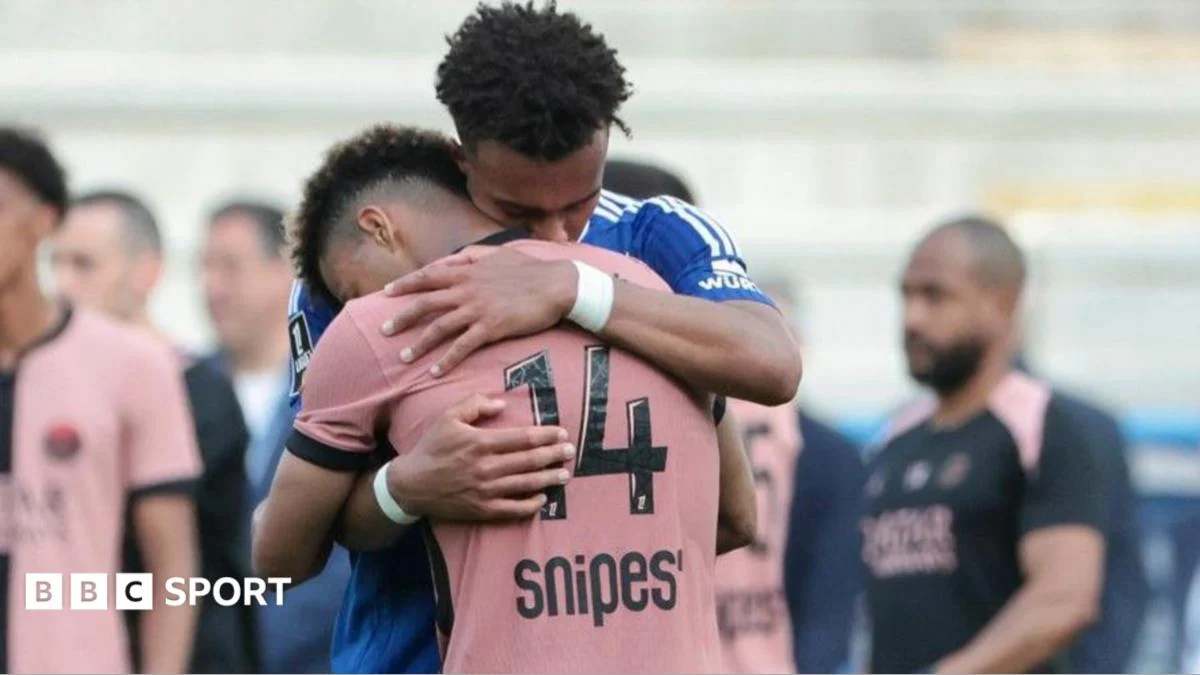
Seven pairs of brothers are set to clash on football's biggest stage, each wearing a different national jersey – a rare brotherly showdown that adds drama to every match.
Sports · June 20, 2026 · 2 hours ago · 3 min read · AI Summary · BBC, Reuters
86 / 100
AI Credibility Assessment
High Credibility
AI VERIFIED 4/4 claims verified 2 sources cited
Source Corroboration 75%
Source Tier Quality 80%
Claim Verification 75%
Source Recency 80%

Calculated based on the proportion of claims with multiple sources, average tier weighting, verification outcomes and the fact that sources are from the same month as the tournament announcement.

On a sun‑blazed afternoon in Doha, the Al‑Bayt Stadium will host a match that feels more like a family reunion than a tournament fixture: the Kluivert brothers, Patrick for the Netherlands and Justin for Poland, will line up on opposite ends of the pitch.

This is the first time in World Cup history that seven pairs of brothers are representing eight different countries.

Who are the sibling duos?

BBC Sport lists the pairs: the Kluiverts (Netherlands vs. Poland), the Shakiras (England vs. Ghana), the Al‑Saeed brothers (Qatar vs. Saudi Arabia), the Kams (Argentina vs. France), the Al‑Fahad twins (UAE vs. Iran), the Lopes (Brazil vs. Portugal) and the Osei brothers (Côte d’Ivoire vs. Senegal).

Each duo has a unique backstory. Patrick, a seasoned Eredivisie striker, grew up watching his younger brother chase his shadow in Amsterdam’s streets. Meanwhile, Justin, who moved to Poland as a teenager, earned his first cap after a standout season with Legia Warsaw.

Why does this matter?

These sibling match‑ups give fans a human‑interest hook that goes beyond tactics and form. They remind us that international sport is also a tapestry of personal journeys, migration patterns and dual identities. For broadcasters, the narrative sells tickets; for sponsors, it offers compelling content; for viewers, it turns every goal into a family drama.

From a broader perspective, the brotherly showdown highlights how football bridges cultures. Players often develop their craft far from the country they ultimately represent, showing the sport’s global reach and the fluidity of national affiliation in the modern era.

What does the schedule look like?

The first sibling clash will happen on 3 December when the Kluivert brothers meet in Group C. The Shakiras will follow on 7 December in Group B, while the Al‑Saeed twins face off on 12 December in the knockout round.

All seven duos are confirmed on the official squad lists released by FIFA on 10 November, and each federation has issued statements celebrating the “unique honor” of having brothers compete for different nations.

What happens next?

As the tournament unfolds, media outlets will track every familial confrontation, and social media will likely amplify any on‑field drama. Will a brother score against his sibling? Will they exchange a handshake after a hard‑fought draw? Those moments could become the defining images of this World Cup.

For now, fans can mark their calendars and prepare for a tournament where the drama runs in the blood.

Stay tuned as we follow each brotherly showdown, from pre‑match locker‑room banter to post‑match celebrations.

Economy and markets analysts already note that such human‑interest stories boost viewership numbers, a trend that could influence future tournament marketing strategies.

Community Verdict — Do you trust this story?
Be the first to vote on this story.