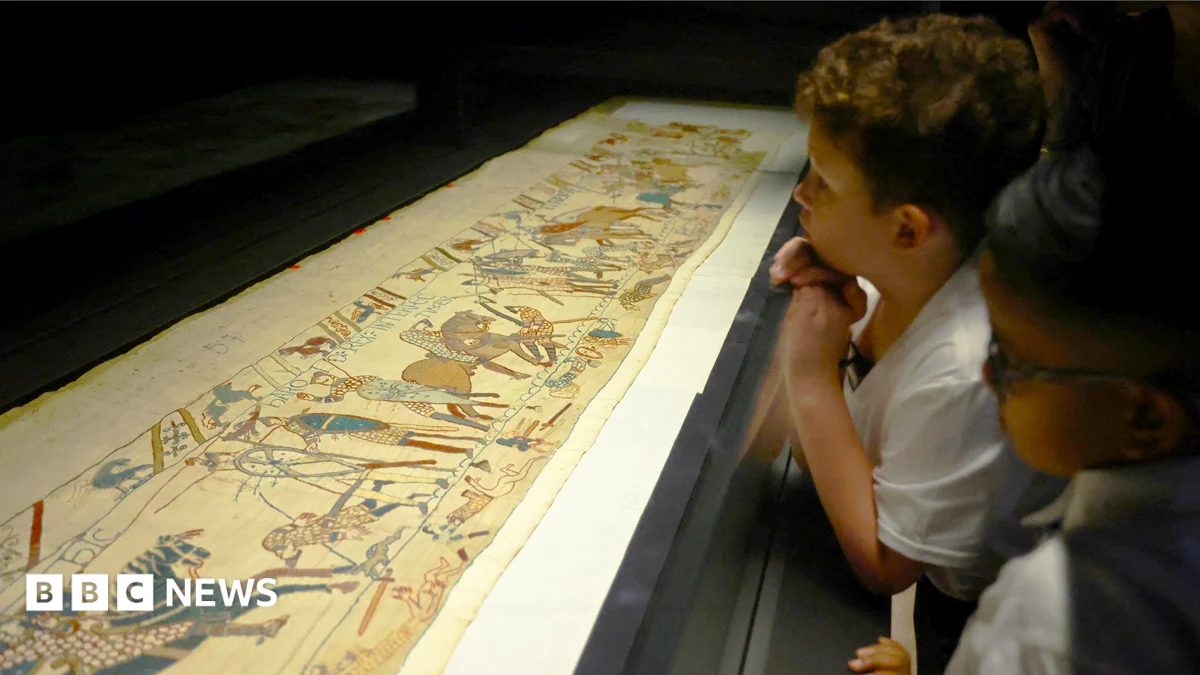
The British Museum has apologized for disruptions affecting public access to the Bayeux Tapestry exhibition, following concerns over long queues and overcrowding. Museum officials adjusted how visitors experience the display in response to complaints about crowd management. The tapestry, on loan from France, remains one of the museum’s most popular temporary exhibitions.
Key Facts:
- British Museum boss issued a public apology.
- Apology concerned Bayeux Tapestry visitor issues including long queues.
- Concerns were raised about overcrowding at the exhibition.
- Changes were implemented to how visitors see the Bayeux Tapestry.
What Happened?
The Bayeux Tapestry, an 11th-century embroidered cloth depicting the Norman Conquest of England, has drawn record crowds since arriving at the British Museum from the Bayeux Cathedral in Normandy. With millions expected to visit during its limited run, the influx led to congestion inside the gallery space. Museum staff introduced revised queuing systems and timed entry controls to manage flow and reduce wait times. Officials described the adjustments as necessary to maintain visitor safety and preserve the artwork from excessive exposure. The apology acknowledged shortcomings in initial planning and communication.
Who Is Affected?
Visitors hoping to view the Bayeux Tapestry have faced delays and restricted access due to high demand. Many guests reported waiting over an hour to enter the exhibition hall, prompting criticism on social media and in mainstream press. School groups and tourists were among those particularly impacted by the congestion. The museum’s leadership emphasized that improvements aim to ensure broader public access while protecting the fragile textile. No other exhibitions or galleries were reported affected by the changes.
Why This Matters
The Bayeux Tapestry is among the most significant medieval artifacts in existence, offering a rare physical record of early English history. Its temporary display at the British Museum attracts international attention and contributes significantly to cultural tourism in London. Poor crowd management not only affects visitor satisfaction but may also risk damage to the artifact. How institutions balance accessibility and conservation during high-demand events reflects wider challenges in heritage stewardship. The apology signals institutional accountability and responsiveness to public feedback.
What To Watch
Further updates on visitor capacity and access policies may emerge as more feedback is collected. The British Museum has yet to release detailed visitor statistics or long-term plans for future exhibitions.
What We Know — and What We Don’t
Verified by the source:
- The British Museum issued an apology.
- Problems included long queues and overcrowding.
- Changes were made to visitor access.
- The affected item is the Bayeux Tapestry exhibition.
Still unconfirmed:
- No specific dates for the apology or changes.
- No official name provided for the museum executive.
- No numbers detailing queue lengths or visitor counts.
- No statement on future policy revisions.