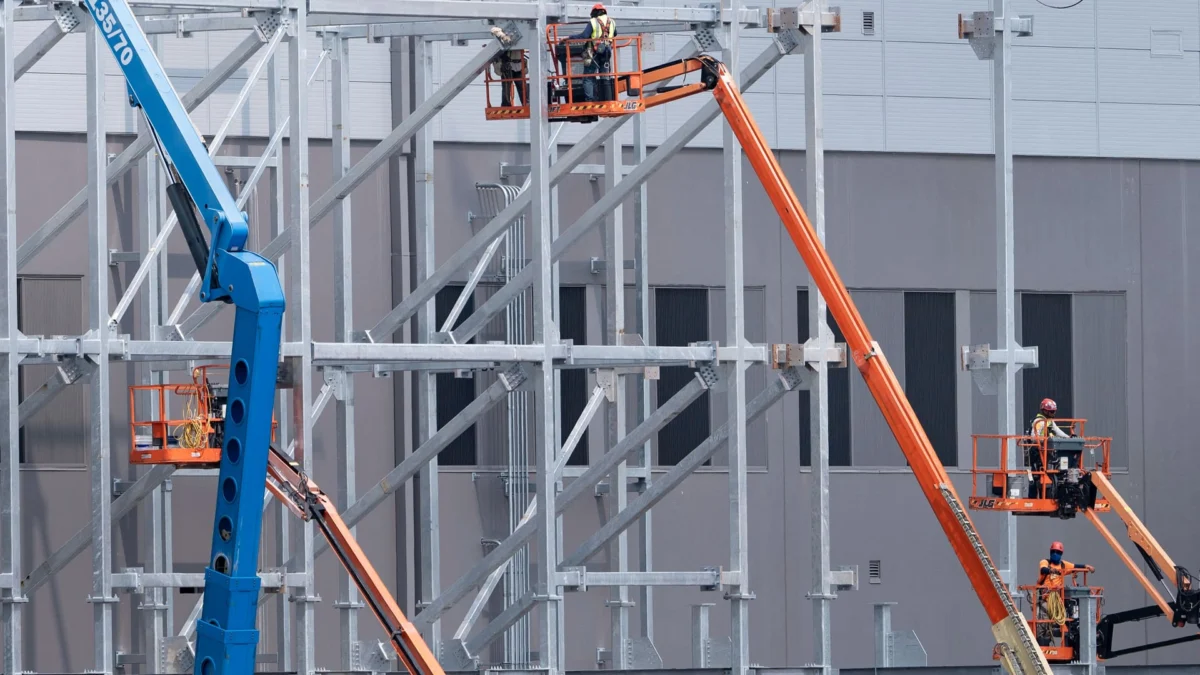
The blue-collar AI job market is booming even as public support for AI data centers sours and states slow development. Workers in HVAC, plumbing, welding, and electrical trades are seeing strong demand tied to data center construction and maintenance.
While policymakers and residents raise concerns about energy use and local impact, the need for skilled technicians and tradespeople continues to grow. This shift reflects how AI infrastructure investments are reshaping labor markets beyond Silicon Valley.
KEY FACTS
- Public opinion has turned skeptical toward AI data center projects.
- States are slowing data center development amid backlash.
- Blue-collar workers in HVAC, plumbing, welding, and electrical roles are benefiting from a job boom.
- Growth is tied directly to AI infrastructure expansion.
- Trade jobs are seeing increased demand due to data center construction activity.
The Story
How Did We Get Here?
AI data center projects have driven hiring across blue-collar trades, creating new opportunities for skilled laborers. As companies expand AI computing capacity, they rely heavily on physical infrastructure — servers, cooling systems, power supplies — all of which require hands-on technical expertise.
HVAC technicians, plumbers, welders, and electricians are among those experiencing rising demand. These roles often cannot be automated and must be filled locally, providing stable employment in regions where data centers are built. However, this boom coincides with growing public scrutiny of large-scale AI projects.
Concerns include noise pollution, water usage, and strain on local utilities. Some states have responded by introducing delays or additional permitting requirements, which could slow future growth in these sectors.
Who Is Affected?
The primary beneficiaries so far are blue-collar professionals with technical certifications or apprenticeships in mechanical and electrical fields. Many report higher wages and improved job security as demand outpaces supply of trained workers.
Local economies near proposed data center sites may also see temporary boosts during construction phases. At the same time, community resistance can delay or block developments, affecting both investor timelines and worker pipelines. The tension highlights shifting dynamics between technological progress and civic engagement.
For now, trade unions and training programs are adapting curricula to meet evolving needs, suggesting sustained interest in preparing workers for AI-related infrastructure roles.
What Happens Next?
Future momentum depends largely on whether regulatory hurdles ease or tighten further. If state-level restrictions continue mounting, some projects might relocate or downsize plans, potentially reducing long-term demand for construction-focused trades.
Conversely, federal or regional incentives aimed at balancing development with environmental standards could stabilize the market. Analysts suggest that resolving permitting bottlenecks without sacrificing oversight remains key to maintaining growth in both AI deployment and associated blue-collar employment.
Investors and policymakers alike will likely monitor upcoming elections closely since they may determine if energy policies align more toward innovation or conservation — each outcome carrying distinct implications for data center-linked jobs.
WHAT WE KNOW — AND WHAT WE DON’T
Verified by the source:
- The public views AI data centers negatively.
- States are delaying data center development.
- HVAC, plumbing, welding, and electrical workers benefit from job growth.
- This hiring trend connects to AI infrastructure expansion.
Still unconfirmed:
- No specific numbers on job creation or project cancellations.
- No timeline given for policy changes or project delays.
- No confirmation of which states are involved or why.
- No cited examples of affected individuals or communities.
Why It Matters
This story illustrates how AI’s ripple effects extend far beyond tech circles, influencing everyday workers and voters grappling with trade-offs around automation, energy use, and economic opportunity. Understanding these tensions helps readers navigate debates over technology’s role in society.
What To Watch
Further policy shifts at state and federal levels could reshape the outlook for both AI development and blue-collar hiring trends linked to data infrastructure. Updates on new legislation or major project announcements may clarify how this balance evolves.