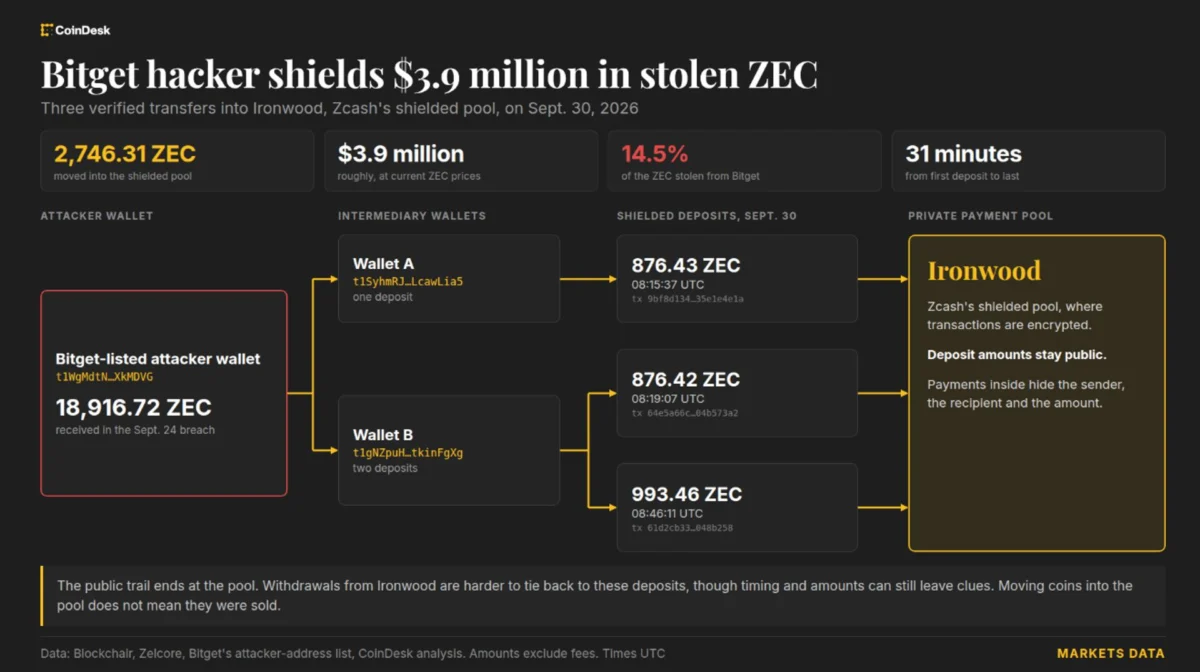
Bitget hackers moved roughly $4 million in stolen Zcash into a private transaction pool, obscuring ownership and complicating recovery efforts. The funds were pushed into Ironwood, a Zcash feature that hides senders, recipients, and amounts. About 15% of the stolen ZEC now sits in this privacy-focused pool.
The transfers occurred across three separate transactions, according to CoinDesk: Bitcoin, Ethereum, Crypto News and Price Data. Moving assets into a private pool makes blockchain analysis significantly harder, since standard tracing tools can no longer follow the money trail.
Key Facts
- $4 million in stolen funds moved by Bitget hackers.
- Funds were sent into Zcash’s Ironwood private transaction pool.
- Ironwood hides the senders, recipients, and amounts of payments.
- Three transfers pushed roughly 15% of the stolen ZEC into the private pool.
What This Means for Tracing Stolen Crypto
Moving cryptocurrencies into a privacy pool is a common tactic among cybercriminals seeking to launder stolen assets. Zcash’s Ironwood pool uses zero-knowledge proofs to encrypt transaction metadata, meaning even experienced blockchain investigators lose visibility once funds enter. This complicates efforts by exchanges, law enforcement, and recovery firms tracking illicit flows.
For platforms like Bitget, the theft already represents reputational and financial damage. The use of a private pool extends exposure by potentially enabling long-term concealment of the loot. Recovery becomes probabilistic rather than deterministic, relying on off-chain intelligence rather than on-chain forensics.
Who Is Affected and How Did We Get Here?
The primary victims remain Bitget users whose funds were compromised, along with any institutions later exposed to tumbling services or mixing protocols tied to the proceeds. Regulators continue pressuring exchanges to strengthen custody standards, but decentralized privacy tools complicate oversight. The incident reflects growing reliance on privacy infrastructure by bad actors.
Zcash has long marketed itself as a shielded alternative to Bitcoin and Ethereum, appealing to privacy-conscious users. However, features designed for legitimate anonymity also attract criminals. This tension keeps policymakers debating whether privacy tools should face restrictions or oversight.
What We Know — and What We Don’t
Verified by the source:
- Bitget hackers transferred approximately $4 million worth of Zcash.
- The funds entered Zcash’s Ironwood private pool.
- Ironwood conceals senders, recipients, and payment amounts.
- The movement occurred via three separate transfers.
- Roughly 15% of the stolen ZEC was moved.
Still unconfirmed:
- The exact date or timeframe of the transfers remains unreported.
- The initial breach method and perpetrator identity are unknown.
- No official statements from Bitget or law enforcement have been cited.
- Total amount of ZEC stolen has not been independently verified.
Why It Matters
This event underscores the dual-use dilemma facing cryptocurrency ecosystems: privacy-enhancing technologies protect legitimate users while also shielding criminal activity. As regulators weigh tighter controls on anonymity tools, users and platforms must balance security, compliance, and usability concerns.
What to Watch
Observers will watch whether Bitget or regulators issue further details about the breach. Additional blockchain movements or exchange actions could confirm or alter current understanding of the theft’s scope.