Lede
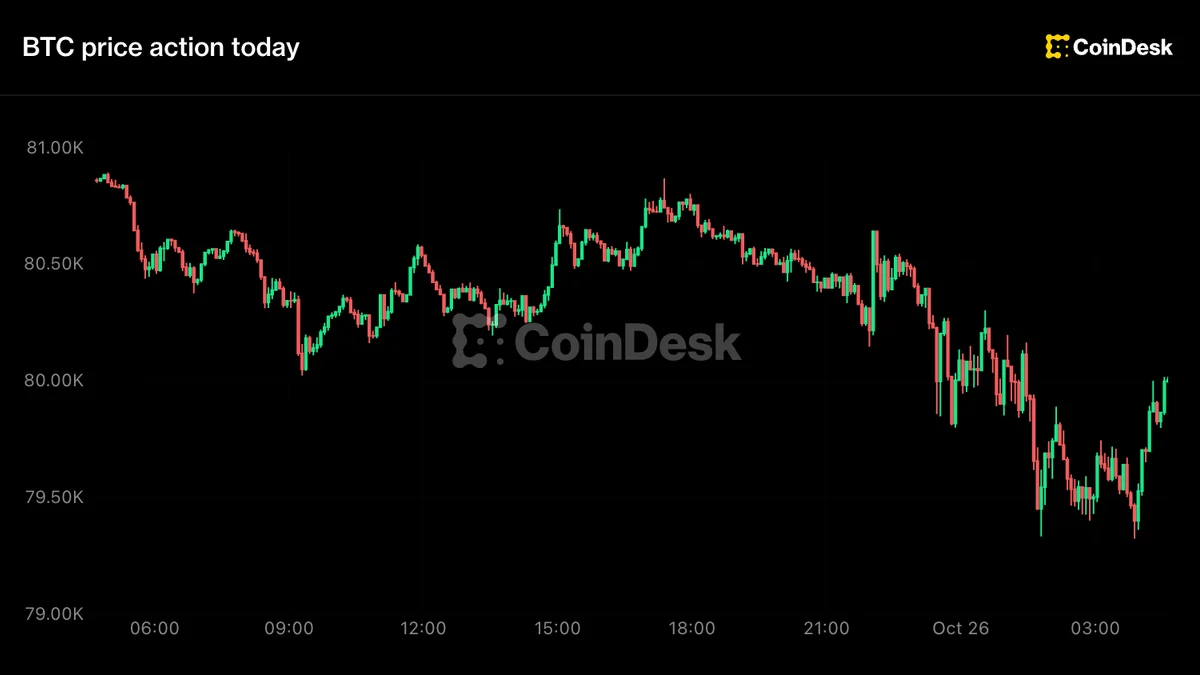
Bitcoin slipped below $80,000 as traders de-risked ahead of a key Federal Reserve meeting, pressuring major cryptocurrencies during Asian trading hours.
Ether and XRP led the decline across the broader crypto market, with the artificial intelligence-linked token sector taking another hit. Goldman Sachs also moved to cut its Kospi index target by 25% during the same period, reinforcing cautious investor sentiment.
These movements reflect how macroeconomic expectations—particularly around central bank policy—directly influence crypto valuations and investor behavior.
KEY FACTS
- Bitcoin slipped below $80,000 ahead of a Federal Reserve meeting.
- Traders de-risked across crypto markets in anticipation of Fed decisions.
- Ether and XRP led losses among major cryptocurrencies.
- The artificial intelligence trade faced renewed pressure in Asian markets.
- Goldman Sachs reduced its Kospi index target by 25%.
Story
Who is affected?
Crypto investors holding Bitcoin, Ether, and XRP experienced heightened volatility as prices dropped during early trading sessions. The decline in Ether and XRP suggests that altcoin holders are among the most affected by this risk-off trend, particularly those exposed to speculative sectors such as artificial intelligence-themed tokens.
Institutional participants such as Goldman Sachs have also signaled caution, further validating bearish sentiment. Investors may be positioning for downside scenarios in both traditional and digital asset markets.
How did we get here?
Bitcoin’s movement under $80,000 follows escalating uncertainty surrounding global monetary policy, especially as markets await signals from the Federal Reserve. Traders appear to be reducing leveraged or high-risk positions ahead of potential rate cuts or economic guidance that could impact liquidity flows into crypto assets.
Goldman Sachs’ 25% reduction in its Kospi target underscores broader concerns about equity and tech-linked investments, which often overlap with crypto exposure. Combined with weakness in AI trade assets, investor nerves appear stretched thin across multiple speculative domains.
What happens next?
Market direction will likely hinge on the Federal Reserve meeting’s outcomes and accompanying commentary. If policymakers indicate tighter or more uncertain fiscal timelines, crypto prices may face continued headwinds. Conversely, dovish signals could stabilize trader confidence and trigger modest rebounds.
Until clearer guidance emerges, de-risking patterns are expected to persist, especially in sectors tied closely to macroeconomic sensitivity such as artificial intelligence-linked tokens.
WHAT WE KNOW — AND WHAT WE DON’T
Verified by the source:
- Bitcoin fell below $80,000 before the Fed meeting.
- Investors moved toward lower-risk assets.
- Ether and XRP were the top losers among major cryptocurrencies.
- Goldman Sachs cut its Kospi target by 25%.
- The AI-related crypto trade weakened again in Asia.
Still unconfirmed:
- Exact timing or intraday low of Bitcoin’s dip.
- Identity or role of any Goldman Sachs analyst involved.
- Specific AI tokens or projects impacted by recent losses.
Why It Matters
This latest downturn highlights how crypto values remain highly responsive to broader economic forecasts and institutional cues. Understanding these linkages helps retail and institutional investors alike assess how shifts in traditional markets may ripple into digital asset spaces.
What To Watch
All eyes turn to the upcoming Federal Reserve announcement and whether new policy signals calm or intensify current market jitters.