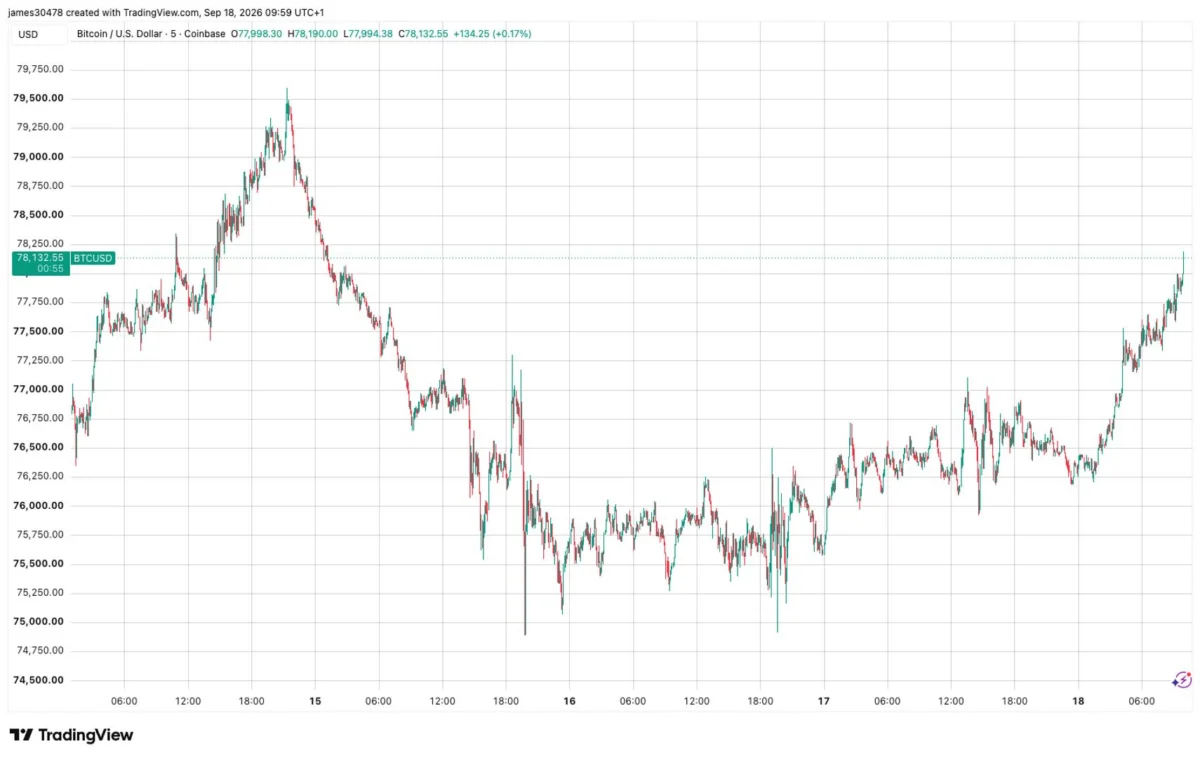
Bitcoin proved resilient in September, declining just 1.5% during what is typically its weakest month, according to CoinDesk. The cryptocurrency market faced headwinds including rising interest rates, increasing oil prices, and a strengthening U.S. dollar, yet the asset class managed to hold ground better than historical averages suggest it might.
By remaining relatively stable amid these macroeconomic pressures, Bitcoin stayed on pace for its first quarterly gain in over a year, offering a rare bright spot in an otherwise challenging investment landscape. This performance underscores continued investor interest despite broader financial tightening and uncertainty around pending regulatory frameworks like the Clarity Act.
Key Facts
- Bitcoin down only 1.5% in historically weak September.
- Remains on track for first quarterly gain in a year.
- Moving lower despite rising interest rates, surging oil prices, and stronger dollar.
- Performance tested by rate hikes and Clarity Act setback.
What Happened This Month
The combination of rising interest rates, elevated oil prices, and a firm dollar created a tough environment for risk assets, including cryptocurrencies. Typically, higher borrowing costs reduce appetite for speculative investments such as Bitcoin. However, the digital asset showed surprising stability during this period.
This resilience may reflect growing institutional adoption or perceptions of Bitcoin as a hedge against inflation amid volatile global markets. While traditional equities struggled under similar conditions, crypto markets demonstrated relative strength.
How Did We Get Here?
Interest rate hikes implemented by central banks aimed at curbing inflation have weighed heavily on many investment sectors. Alongside monetary tightening, geopolitical tensions contributed to surging energy prices, particularly oil, which added further strain on consumer spending and corporate profits.
In addition to economic factors, regulatory developments played a role. The Clarity Act faced setbacks recently, creating uncertainty among investors about future governance standards for crypto firms. Despite these challenges, Bitcoin managed to avoid significant sell-offs during the month.
What We Know — and What We Don–t
Verified by the source:
- Bitcoin fell only 1.5% in September.
- It remains positioned for its first quarterly gain in a year.
- Rising rates, higher oil prices, and a stronger dollar were cited as pressures affecting performance.
- The Clarity Act experienced a legislative setback during the same timeframe.
Still unconfirmed:
- No specific timeline or outcome details regarding the Clarity Act beyond ‘setback’ mentioned in summary.
- Exact magnitude of impact from individual economic variables not quantified.
- Investor sentiment drivers behind price stability aren’t elaborated upon in the report.
Why It Matters
For everyday investors watching their portfolios swing through volatile times, Bitcoin’s ability to weather mixed macroeconomic signals offers insight into evolving attitudes toward digital currencies. Whether this marks a shift toward acceptance or simply reflects temporary market dynamics will depend on upcoming policy decisions and sustained economic indicators.
What To Watch
Investors should monitor Federal Reserve announcements on interest rates and any further legislative progress—or stagnation—on the Clarity Act, both of which could significantly influence short-term crypto movements.