Lede
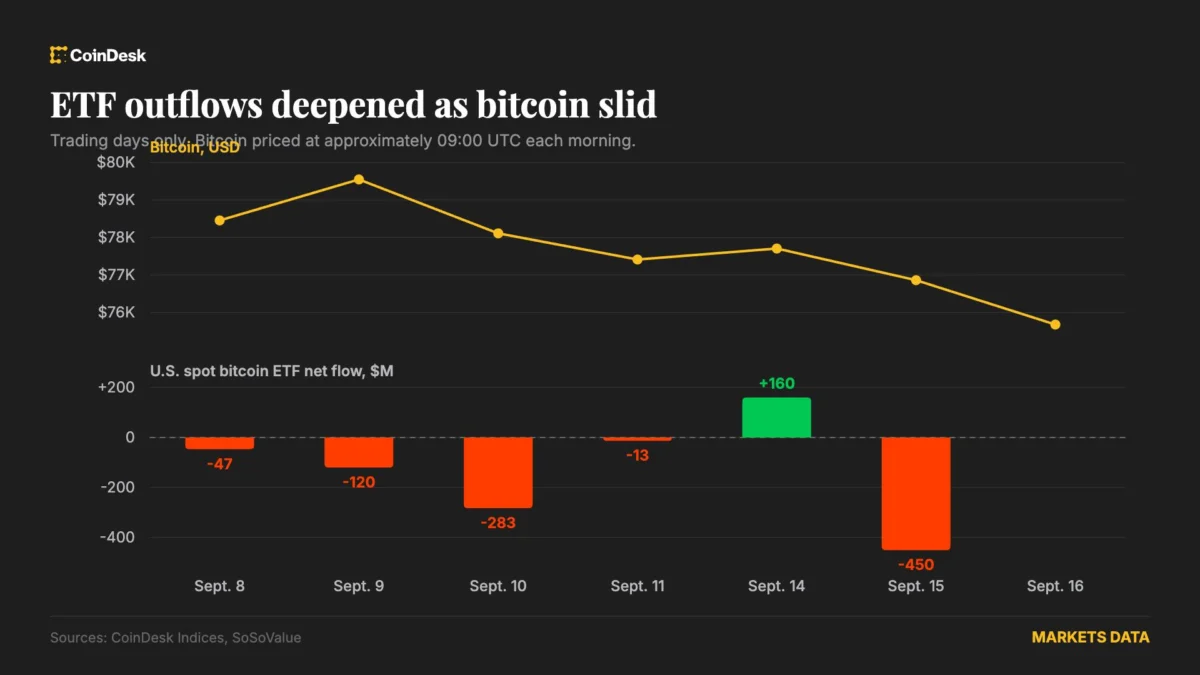
U.S. spot bitcoin etfs shed $450 million in net outflows, marking the largest weekly withdrawal since June, as investor sentiment soured following the Senate’s failure to advance the Clarity Act. The pullback reflected heightened sensitivity among market participants to regulatory developments affecting digital assets, particularly those tied to blockchain classification and oversight.
The outflow data underscores how closely bitcoin etfs track not only price movements in the underlying cryptocurrency but also broader shifts in policy expectations. While the funds had drawn consistent inflows earlier this year, the recent decline signals renewed caution among institutional and retail investors alike.
Key Facts
- U.S. spot bitcoin etfs lost $450 million in outflows.
- The outflow marked the largest weekly withdrawal since June.
- The decline followed the Senate’s failure to advance the Clarity Act.
- Regulatory-sensitive tokens dropped sharply after the vote.
How Did We Get Here?
The Clarity Act, formally known as the Digital Asset and Market Structure and Investor Protection Act, was designed to clarify how digital assets are classified under existing securities laws. Its failure to advance in the Senate removed a key catalyst that many investors had hoped would bring regulatory certainty to the crypto sector. Without clear legislative direction, markets often react with increased volatility, especially in instruments like bitcoin etfs that sit at the intersection of traditional finance and digital assets.
ETF performance tends to mirror both macroeconomic conditions and evolving perceptions of regulatory risk. When lawmakers signal progress on legislation aimed at legitimizing or integrating digital assets, investor confidence typically rises. Conversely, stalled or failed bills can trigger rapid repositioning, leading to sudden capital exits from related financial products.
What Happens Next?
Markets will likely continue to react to any renewed legislative activity surrounding digital asset regulation. If Congress revisits similar frameworks or introduces new proposals, bitcoin etfs could see renewed inflows as investors seek clarity on future compliance standards. For now, however, the absence of forward momentum leaves the sector vulnerable to further swings based on procedural updates or unexpected policy statements.
Analysts note that while short-term volatility is expected, long-term adoption of bitcoin etfs still depends heavily on whether regulators eventually define consistent rules for digital asset trading and custody. Until then, daily flows may remain erratic, driven more by sentiment than fundamentals.
What We Know — and What We Don’t
Verified by the source:
- U.S. spot bitcoin etfs experienced $450 million in weekly outflows.
- This was the largest weekly outflow since June.
- The outflows occurred after the Senate failed to advance the Clarity Act.
- Regulatory-sensitive tokens declined sharply following the legislative setback.
Still unconfirmed:
- No specific timeline for when the Clarity Act might return to the legislative agenda.
- No individual fund names named as primary contributors to the outflows.
- No official comment from the ETF issuers or SEC included in the source.
Why It Matters
The link between legislative progress and ETF investor behavior highlights the growing maturity—and vulnerability—of the digital asset ecosystem. As bitcoin etfs become integrated into mainstream portfolios, their responsiveness to regulatory cues will shape how traditional markets interact with cryptocurrencies going forward.
What To Watch
Investors should monitor whether the Senate takes up revised versions of digital asset legislation or pivots toward alternative regulatory frameworks. Any indication of renewed momentum could reverse the recent outflow trend.