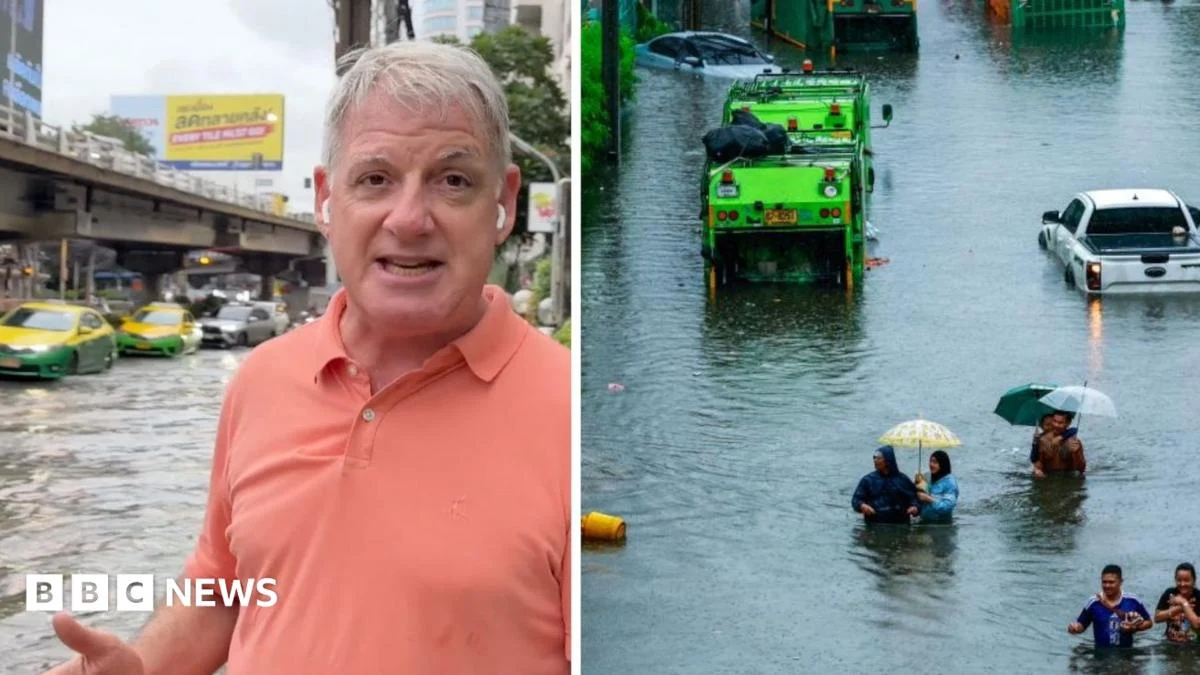
Bangkok has been declared a flood disaster zone after heavy rainfall over the past two days overwhelmed the capital’s drainage and water management systems. The declaration comes as authorities brace for additional rain forecast on Sunday, raising concerns about further strain on already saturated infrastructure.
The situation escalated rapidly as consecutive days of intense precipitation pushed the city’s water systems beyond capacity. Local officials confirmed that several districts are experiencing significant surface flooding, disrupting transportation and daily life across the Thai capital.
KEY FACTS
- Bangkok declared a flood disaster zone
- Heavy rain over the last two days overwhelmed water systems
- More rain forecast on Sunday
What Happens Next?
With additional rainfall predicted for Sunday, the city faces mounting pressure as water systems remain overwhelmed. Emergency response teams are likely to intensify monitoring of vulnerable areas, particularly those already reporting flooding. Residents in low-lying districts should prepare for potential evacuations or movement restrictions if water levels rise further.
The upcoming forecast introduces a critical unknown: whether current drainage efforts can cope with the expected new rainfall. Authorities may deploy sandbags, pumps, and other flood mitigation resources to protect key infrastructure and residential neighborhoods.
Meteorological departments often issue real-time updates during such events, and officials typically issue public safety warnings as conditions evolve. Citizens are generally advised to avoid driving through flooded streets and to stay informed through official communication channels.
How Did We Get Here?
Bangkok sits at the mouth of the Chao Phraya River and experiences seasonal monsoon rains that can overwhelm its drainage network. In recent years, urban development and drainage maintenance challenges have contributed to increased vulnerability during heavy precipitation events.
The recent weather pattern appears consistent with seasonal norms, but the intensity of rainfall over just two days created an acute crisis. Such short-term spikes in precipitation are particularly stressful for aging infrastructure systems designed for typical rather than extreme conditions.
Moving forward, urban planners and emergency officials often review flood response protocols after such incidents to identify gaps and improve preparedness for future disasters.
WHAT WE KNOW & WHAT WE DON’T
Verified by the source:
- Bangkok declared a flood disaster zone
- Heavy rain over the last two days occurred
- Rain overwhelmed the city’s water systems
- More rain is forecast on Sunday
Still unconfirmed:
- Exact areas or districts affected by flooding
- Number of people impacted or displaced
- Statements from local or national officials
- Timeline for when the disaster zone was declared
- Specific measures being taken by emergency responders
WHY IT MATTERS
Bangkok is one of Southeast Asia’s major economic hubs, and disruptions to its infrastructure can have regional consequences. A severe Bangkok flood event could affect supply chains, transportation networks, and millions of residents who call the city home. Understanding the progression of such events helps inform broader discussions on urban resilience and climate adaptation strategies.
WHAT TO WATCH
All eyes will be on whether the forecasted Sunday rain triggers worsening conditions or if mitigation efforts provide effective relief. Updates from local authorities and updated weather forecasts will be key in shaping the city’s response.