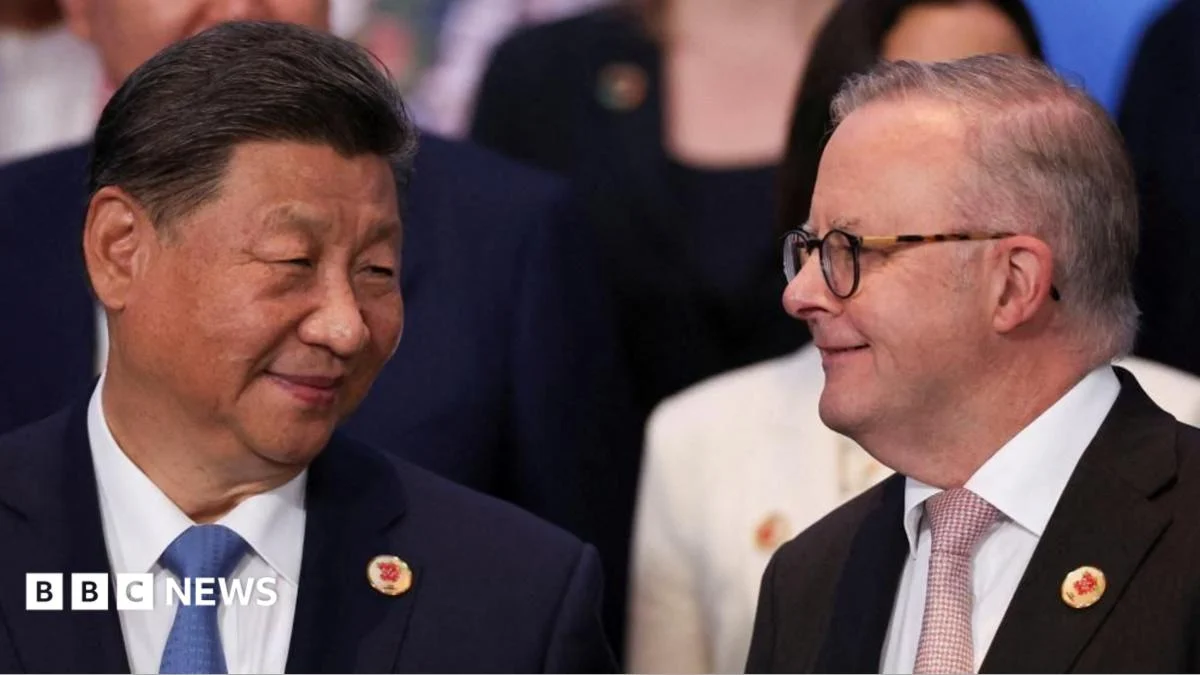
Australia is caught in a widening superpower rivalry, trying to manage growing security concerns about China without damaging a vital economic relationship.
Beijing remains Australia’s biggest trade partner even as Canberra expresses increasing worry over China’s expanding military capabilities. That tension defines much of Australia’s foreign policy today.
Key Facts
- Australia is concerned about China’s military growth.
- China is Australia’s largest trading partner.
- The relationship reflects broader superpower rivalry.
Why the Balancing Act Matters
Australia’s position highlights the difficulty middle powers face when caught between two major powers. On one side lies economic dependence; on the other, strategic unease. This dynamic shapes everything from diplomatic tone to defense spending and alliance choices.
How Did We Get Here?
For years, Australia relied heavily on exports to China, particularly iron ore and agricultural goods. As China’s military modernization accelerated, however, Australian leaders grew wary of over-reliance on a single partner with divergent geopolitical goals. That wariness has pushed Canberra closer to traditional allies such as the United States, complicating an already delicate partnership.
The challenge now is maintaining open commerce while addressing security concerns. Trade restrictions, diplomatic spats, and strategic signaling have all become tools in Australia’s approach to this relationship. Yet no clear path exists for fully separating economics from geopolitics in a world where supply chains and defense priorities increasingly overlap.
What Happens Next?
Australia’s policymakers must decide whether to deepen strategic ties with partners beyond China or pursue a more autonomous regional role. Each option carries risks: stronger alignment with the U.S. may escalate tensions with Beijing, while reduced engagement could harm economic growth. Analysts are watching how Canberra navigates upcoming trade negotiations and defense cooperation discussions.
Meanwhile, China’s response to Australian policies is likely to remain reactive rather than conciliatory. The trajectory of both nations’ actions will signal how other regional partners manage similar dilemmas. Expect continued emphasis on diversifying trade relationships while strengthening security partnerships.
What We Know — and What We Don’t
Verified by the source:
- Australia’s biggest trade partner is China.
- Australia has increasing concern about China’s military might.
- The relationship reflects broader superpower rivalry pressures.
Still unconfirmed:
- Specific policy responses or timelines are not stated.
- No official quotes or named individuals are provided.
- No numerical data on trade value or military spending included.
- Unclear whether recent incidents triggered current concern levels.
Why It Matters
For readers, superpower rivalry involving major economies affects everything from consumer prices to job markets and investment flows. Australia’s balancing act offers a preview of how other nations may respond when economic ties clash with strategic interests.
What To Watch
Future trade agreements and defense cooperation moves will indicate whether Australia leans further toward one partner or continues seeking equilibrium in the evolving superpower rivalry.
Explore more war-geopolitics coverage or visit our economy and markets section.