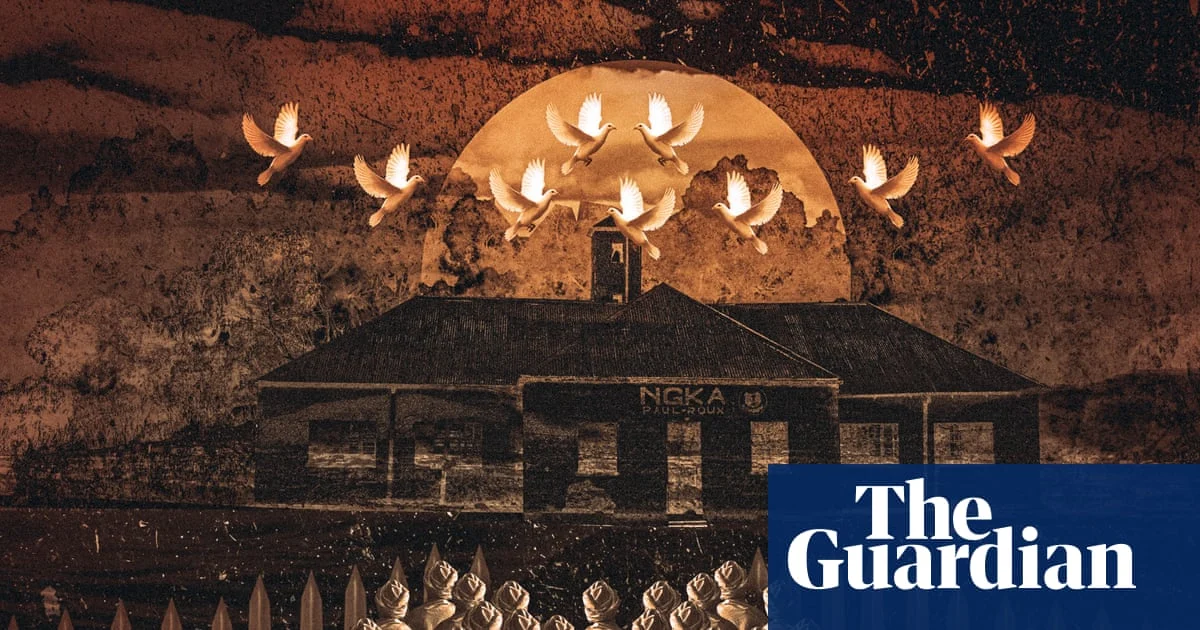
South African artist Puleng Mongale connects with the women of her family through the imagery of her childhood church, not primarily through religion, but through shared history and memory. This approach is central to her artistic exploration, as highlighted in her work.
Mongale’s art delves into the symbolic representation of the church as a site of collective memory and familial bonds. Her creative process involves intertwining personal experiences with these foundational cultural elements, offering a unique perspective on heritage and identity.
Key Facts
- Puleng Mongale is a South African artist.
- She explores her childhood church’s connection to family women.
- The connection is based on shared history and memory, not religion.
- Her work “Holy Gang” features a church and multiplied self-portraits.
- The women in “Holy Gang” move towards, but not to, the church.
How Does the Artist Interpret the Church Imagery?
Puleng Mongale interprets the church in her art as a focal point for family history rather than a purely religious institution. In her piece titled ‘Holy Gang,’ she combines an image of a church located in her mother’s hometown, Fateng-tse-Ntsho, in Free State province, South Africa, with self-portraits. These self-portraits are multiplied to create a group of women, visually demonstrating a collective presence.
The composition suggests movement towards the church, yet Mongale clarifies that this is not the ultimate destination within the artwork’s narrative. This nuanced portrayal underscores her exploration of connections that extend beyond conventional religious frameworks. The church serves as a symbolic anchor for ancestral and familial ties.
What Symbolism Does the ‘Rising Sun’ Hold?
Positioned higher and beyond the church in Mongale’s ‘Holy Gang’ piece, a rising sun appears. For the artist, this sun is a powerful symbol representing a space where she can engage with her ancestors, transcending religious limitations. This is significant because, while her ancestors were members of the church, Mongale herself is not, highlighting a personal journey that respects heritage without being bound by religious affiliation.
The rising sun symbolizes a meeting point that exists outside the confines of organized religion, emphasizing a spiritual or historical connection. This artistic choice reinforces the theme of shared history and memory as the primary conduit for her family church connection, rather than doctrine or creed. It illustrates a broader, more inclusive understanding of ancestral connection.
What We Know — and What We Don’t
Verified by the source:
- Puleng Mongale is a South African artist.
- Her work ‘Holy Gang’ depicts a church in Fateng-tse-Ntsho.
- ‘Holy Gang’ includes multiplied self-portraits of Mongale.
- The women in ‘Holy Gang’ are shown moving towards, but not reaching, the church.
- The artist states the sun in her work represents meeting ancestors beyond religious limits.
Still unconfirmed:
- The specific date when Mongale created ‘Holy Gang.’
- The exact size or medium of the ‘Holy Gang’ artwork.
- Details on other works by Puleng Mongale.
- Public reception or exhibition history of ‘Holy Gang.’
- Further biographical details about the artist.
Why It Matters
Mongale’s work offers a compelling perspective on how cultural and familial heritage can be interpreted through art, moving beyond strict religious definitions. It resonates with audiences interested in identity, memory, and the complex relationship between personal experience and historical sites. This artistic exploration provides a contemporary view of preserving ancestral connections while forging individual paths.
What to Watch
Future discussions around Puleng Mongale’s work will likely continue to explore her unique perspective on family church connection and its cultural implications. Further commentary from art critics or additional statements from the artist could provide deeper insights into her evolving themes.