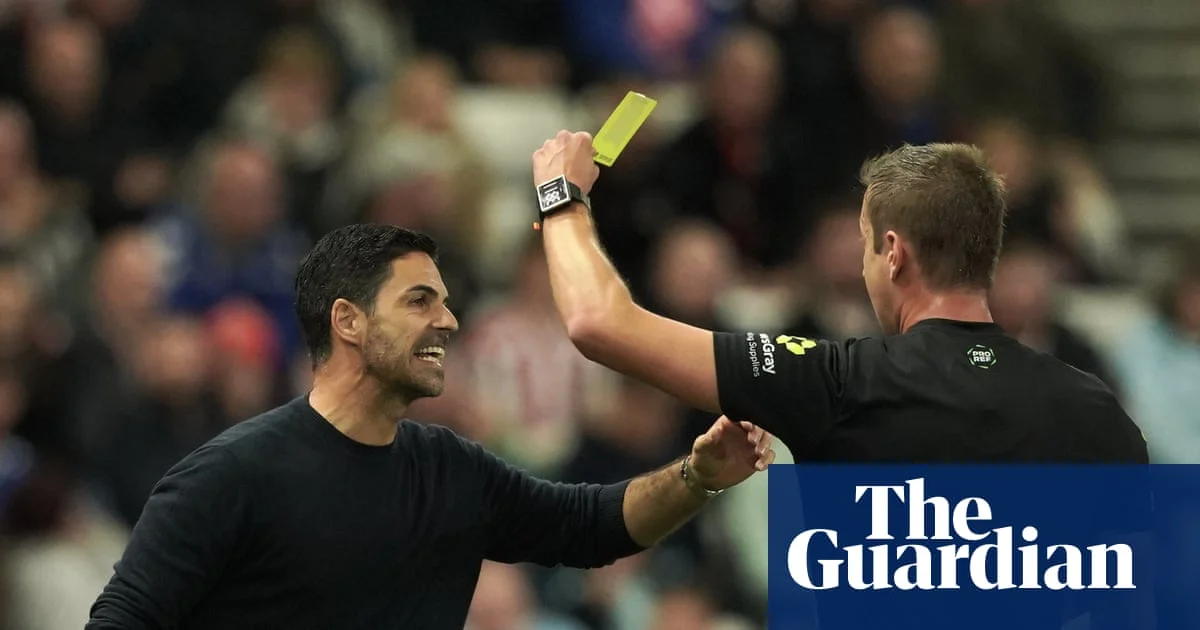
Mikel Arteta’s post-match press conferences are drawing criticism for fostering a culture that places referees under intense scrutiny, according to a Guardian column examining the pressures facing officials in elite football.
The article argues that managers now operate within a culture of micro-analysis, where every word spoken after a match is meticulously parsed, making refereeing an increasingly difficult task. Arteta is portrayed as leveraging this environment to play the victim in a situation largely of his own making.
Writers suggest that the modern press conference has evolved into a strategic performance, where emotions such as anger, concern, or charm are rarely expressed unintentionally. This dynamic, the piece argues, contributes to an atmosphere where officials are constantly second-guessed, complicating their ability to manage games freely.
Key Facts
- Mikel Arteta is the subject of a Guardian column discussing refereeing pressures.
- The column claims refereeing has become an impossible job due to micro-analysis of manager comments.
- Arteta is accused of playing the victim in a game of his own making.
- Press conferences are described as carefully planned, scripted performances.
- Nothing in elite football, including manager reactions, happens by accident.
The Story
How Did Press Conferences Become So Strategic?
The modern football press conference has evolved far beyond a simple post-match reaction. Managers now engage in what appears to be a calculated exercise in messaging, where tone, timing, and phrasing are deliberately chosen. The Guardian column suggests that this level of planning has contributed to a broader culture where referees are subjected to constant scrutiny, making their roles increasingly challenging.
This strategic approach is not unique to Arteta, but he is highlighted as a prominent figure exemplifying the trend. The column implies that by carefully crafting his public statements, Arteta can influence narratives around officiating decisions, potentially swaying public opinion and fan sentiment in favour of his team.
The ripple effects extend beyond individual matches. When managers consistently challenge or question officiating, it creates a cumulative effect that can erode trust in referees. This, the article argues, places additional pressure on officials who must perform under heightened expectations and constant analysis.
What Happens Next for Refereeing Standards?
The culture of micro-analysis and strategic communication from managers poses long-term questions for the integrity of refereeing in elite football. If referees are continually second-guessed and their decisions dissected, it may impact their confidence and decision-making on the pitch. The Guardian column suggests that this environment is not merely a symptom of modern media but a deliberate strategy employed by some managers.
Arteta, in particular, is portrayed as using the system to his advantage, carefully positioning himself as aggrieved when decisions don’t favour his team. This tactic, while effective in shifting narratives, contributes to a broader problem where the credibility of referees is undermined by the constant barrage of post-match analysis.
The challenge for football authorities is to balance the need for accountability with the protection of officials. Striking the right balance will be crucial to maintaining the flow and fairness of the game, as well as ensuring that referees can operate without excessive external pressure.
Who Is Affected by This Press Conference Culture?
The effects of strategic press conference culture reach multiple stakeholders in football. Referees bear the brunt of increased scrutiny, facing criticism that can affect their performance and mental resilience. Clubs and managers benefit from the ability to shape narratives, but risk contributing to an environment that undermines the sport’s integrity. Fans and viewers are also impacted, as the constant debate over officiating can overshadow the actual gameplay and outcomes.
What We Know — and What We Don’t
Verified by the source:
- The Guardian published a column discussing refereeing pressures in football.
- The column names Mikel Arteta and critiques his press conference approach.
- The article describes press conferences as planned and intentionally expressive.
- Refereeing is characterised as an increasingly difficult profession.
Still unconfirmed:
- Whether Arteta intentionally seeks to influence refereeing narratives.
- The broader impact of manager comments on referee decision-making.
- Specific examples or quotes from Arteta that support the column’s claims.
The ongoing tension between managers, referees, and the media reflects a broader challenge in maintaining the integrity of football. As the sport continues to evolve, addressing this culture of scrutiny will be essential for preserving the credibility of officiating and the overall quality of the game. The decisions made in the coming seasons will shape how press conferences and media interactions influence the sport moving forward.
Why This Matters
This dynamic between managers and referees affects the integrity of football at all levels. When strategic communication becomes a tool for influencing outcomes, it undermines the impartiality expected of officials and can diminish fan trust in the sport. The stakes extend beyond individual matches, influencing how football is perceived and played globally. Balancing accountability with fair treatment of officials remains a critical challenge for football authorities.
What to Watch
Future press conferences and post-match interviews will likely continue to reflect this strategic approach. Whether football authorities introduce measures to address the culture of scrutiny remains to be seen.