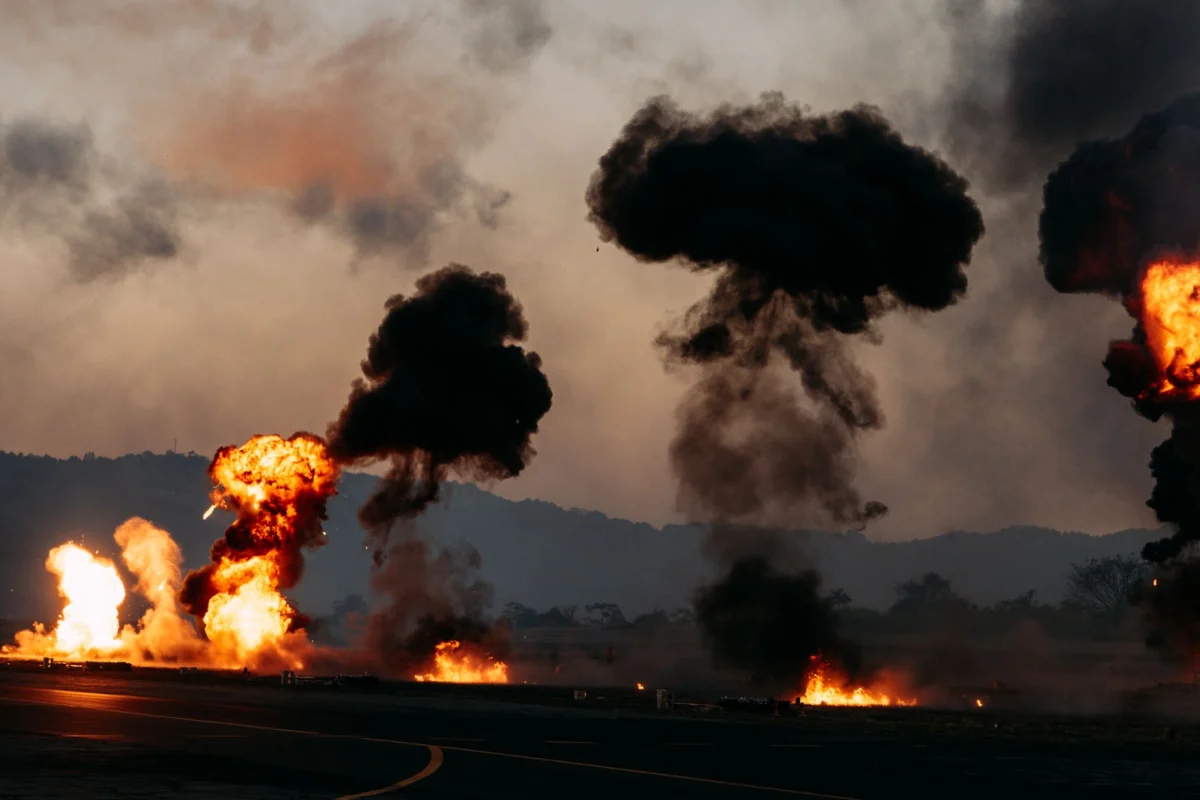
The U.S. Army is preparing to detonate a chemical stockpile of bomb-making materials in Iowa on Wednesday, the day before Thanksgiving. The operation targets a stored supply of hazardous substances used in weapons production, marking another step in the military’s long-running effort to eliminate legacy chemical inventories.
AP News reports the planned destruction will take place at an Iowa facility, though the specific installation was not named in the initial notice. The timing — one of the busiest travel days of the year — underscores the logistical coordination required for such high-risk disposal work.
KEY FACTS
- The U.S. Army will detonate a chemical stockpile
- Materials are described as bomb-making chemicals
- Operation located in Iowa
- Scheduled for day before Thanksgiving
- Reported by AP News
THE STORY
What the disposal operation involves
Detonation is a standard method for destroying certain types of chemical agents and precursor compounds when neutralization or incineration are not feasible. The process typically uses controlled explosions to break down hazardous molecules into less toxic byproducts. Engineers design each shot to contain blast effects and filter emissions, protecting nearby communities and the environment.
The chemical stockpile in question likely contains precursors — industrial chemicals that become weapons only when combined — rather than filled munitions. Precursor destruction avoids the added complexity of handling explosive casings or stabilizing agents. Federal regulations require real-time air monitoring and emergency response teams on standby throughout the operation.
Why Iowa and why now
Iowa hosts several military installations and contractor sites involved in ammunition production and storage. The Iowa Army Ammunition Plant near Middletown has historically managed conventional and chemical workloads. Scheduling the shot for the day before Thanksgiving may reflect a narrow weather window, contractor availability, or a regulatory deadline tied to the Chemical Weapons Convention, which mandates complete destruction of declared stockpiles.
Holiday-week timing also reduces on-site personnel, limiting exposure risk. Local authorities typically coordinate traffic control and public notification well in advance, though the source does not specify what outreach has occurred.
How did we get here
The United States declared a chemical weapons stockpile of roughly 30,000 metric tons when it joined the Chemical Weapons Convention in 1997. The last declared munition was destroyed in July 2023 at the Blue Grass Army Depot in Kentucky. However, precursor chemicals and bulk containers stored separately from weaponized rounds often follow different disposal timelines. The Iowa chemical stockpile appears to fall into this category.
Each site must complete an environmental impact review, obtain state and federal permits, and conduct practice runs before live-agent operations begin. The process can take years per location.
WHAT WE KNOW — AND WHAT WE DON’T
Verified by the source:
- Army plans a detonation of bomb-making chemicals
- Location is in Iowa
- Date is the day before Thanksgiving
- AP News is the reporting outlet
Still unconfirmed:
- Which specific Iowa facility will host the operation
- Exact chemical agents or precursors involved
- Quantity of material to be destroyed
- Whether public notification or evacuation plans are active
- Expected duration of the detonation window
- Regulatory permits or oversight agencies named
WHY IT MATTERS
Chemical stockpile disposal remains a critical national security and environmental protection mission. Even precursor chemicals pose risks if released accidentally or diverted. Completing destruction reduces long-term monitoring costs and eliminates a potential target for theft or sabotage. For Iowa residents, the operation highlights the ongoing presence of military-industrial infrastructure in the Midwest and the safety protocols that govern hazardous work near population centers.
WHAT TO WATCH
Official statements from the Army or the Iowa facility will clarify the specific site, chemicals, and safety measures. Community advisories and air-monitoring data releases typically follow within days of the operation.