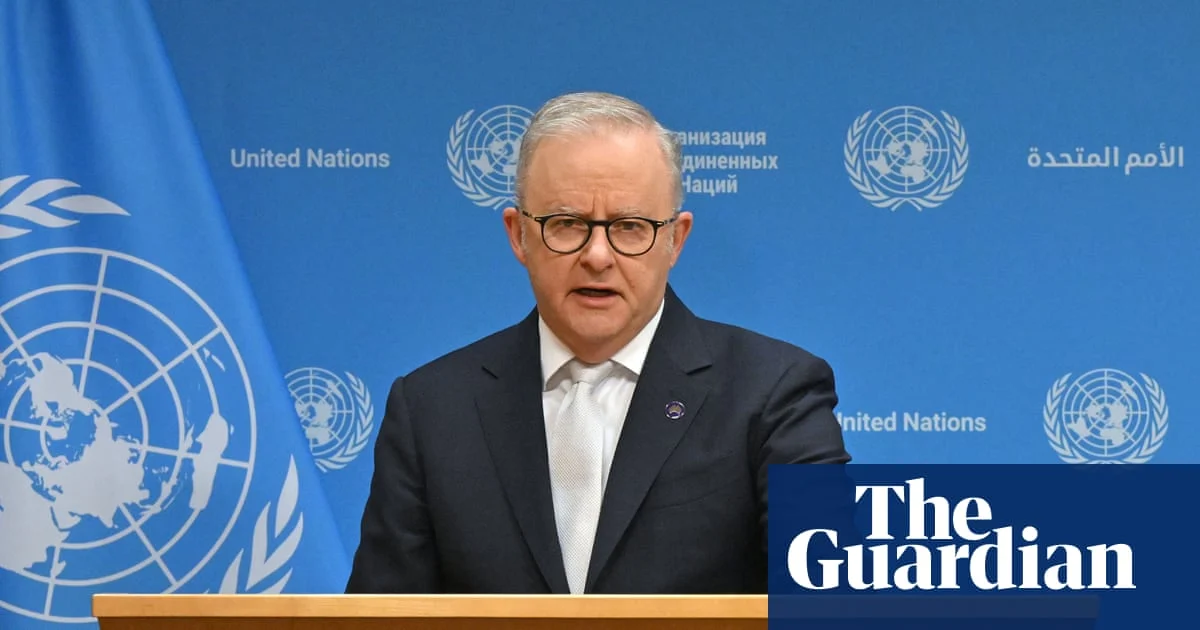
Australia’s prime minister Anthony Albanese has formally launched a bid for Australia to win a two-year seat on the UN Security Council for 2029 and 2030, marking a new chapter in the nation’s multilateral diplomacy.
The announcement signals Canberra’s intent to return to the powerful UN body, where it last held a rotating seat in 2013 and 2014. Albanese argued that securing the seat would help address global challenges and support domestic priorities, including the cost of living. Australia will have to convince nearly two-thirds of UN member states to vote in its favour when the election is held. It will face competition from Finland for the two available seats allocated to the Western European and Others Group.
KEY FACTS
- Anthony Albanese launched Australia’s formal bid for a UN Security Council seat (2029-2030)
- Australia is competing with Finland for a Security Council spot
- A two-thirds majority of UN member states is needed to win a seat
- Albanese says Security Council membership can help with the cost of living back home
The Competition Begins
Australia’s re-entry into the UN Security Council race places it directly against Finland for one of the two seats reserved for the Western European and Others Group. These seats rotate among member states every year, and only five of the ten non-permanent members are elected annually. Candidates must secure a two-thirds majority vote from the full UN General Assembly, meaning broad international support is essential rather than a simple regional endorsement.
Securing the necessary votes often requires extensive diplomatic outreach and campaigning. Australia’s last tenure began in 2013, during which it advocated for issues such as maritime security and nuclear disarmament. That experience could form part of its renewed campaign. The outcome will depend heavily on how well Canberra builds coalitions across continents and manages its messaging around shared global priorities.
How Did We Get Here?
Under Albanese’s leadership, Australia’s foreign policy has increasingly emphasized engagement with multilateral institutions like the UN. The push for a Security Council seat aligns with efforts to raise Australia’s profile on the global stage, particularly amid shifting power dynamics in the Indo-Pacific region. The prime minister framed council membership not only as an honour but also as a tool to advance national interests abroad, including managing regional stability and addressing transnational threats.
This latest bid reflects a long-standing ambition within Australian politics to regain influence at the UN’s most influential decision-making body. Previous governments, both Labor and Liberal, have invested significant resources into similar campaigns. With climate change, global security concerns, and economic uncertainty shaping international agendas, the upcoming contest with Finland is likely to revolve around which candidate better represents shared values and practical contributions to peacekeeping and conflict resolution.
What We Know — and What We Don’t
Verified by the source:
- Australia has submitted a formal bid for a UN Security Council seat for 2029 and 2030
- Finland is also bidding for a seat, making them direct competitors
- A two-thirds majority of member states is required to win election
- Anthony Albanese personally launched the bid
- He linked council membership to helping with the cost of living back home
Still unconfirmed:
- Exact timeline and mechanics of the upcoming vote
- Number of diplomatic missions or funding pledged for the campaign
- Specific platform issues Australia may prioritise during its term
- Current level of international support or endorsements received
- Names or roles of specific officials leading the campaign effort
Why It Matters
A UN Security Council seat grants Australia a voice in shaping responses to global crises, from conflicts abroad to climate emergencies and economic instability. While the council’s veto-wielding permanent members dominate high-stakes decisions, non-permanent members still influence debates and resolutions through procedural votes and advocacy. Winning a seat can enhance diplomatic relationships, attract foreign investment, and boost soft power — factors that indirectly affect Australians through trade opportunities and global security alignment. For many smaller democracies, representing their region in New York or Geneva is seen as a mark of responsible statehood.
What To Watch
The race now turns to behind-the-scenes lobbying among UN delegations, especially those in swing regions whose support could prove decisive. Observers expect further statements from both Canberra and Helsinki outlining their platforms before the formal voting process begins.