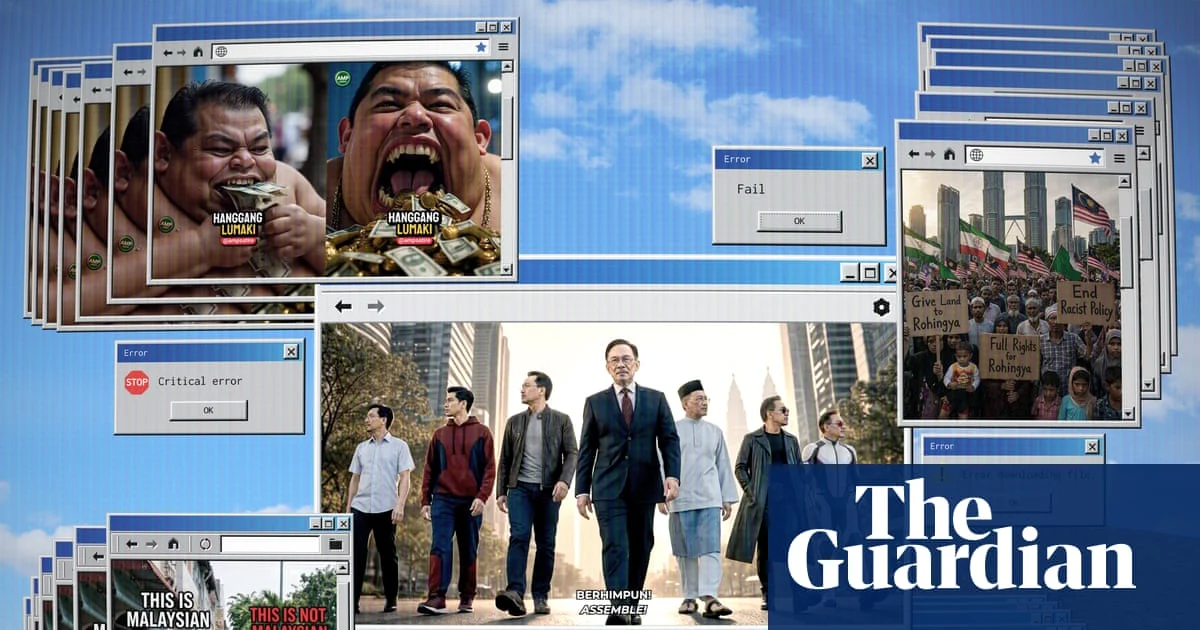
Some experts warn that artificial intelligence could dramatically amplify risks facing elections across Southeast Asia, where many countries have predominantly young and highly connected populations. What once required large teams of cyber troops operating fake news websites and forged dossiers can now be achieved more easily with AI tools, raising new concerns about disinformation at scale.
Key Facts
- Some experts fear AI may be weaponised in Southeast Asia.
- Southeast Asia has many young, hyper-connected populations.
- AI tools have lowered the technical barriers to spreading disinformation.
- Previously, disinformation campaigns required cyber troops and fake websites.
- AI enables faster, larger-scale production of misleading content.
The Story
What happens next?
According to reporting, the spread of generative AI tools has shifted the dynamics of how disinformation campaigns are organized. Instead of relying on coordinated groups managing multiple fake accounts and fabricated publications, actors can now automate much of the process. This technological shift is expected to influence political communication strategies in the region, though specific policy responses remain unclear.
The implications extend beyond technology. Analysts suggest that societies with limited digital literacy infrastructure may face heightened exposure to manipulated media. However, the extent to which governments and civil society groups will adapt their oversight frameworks in time for upcoming elections remains uncertain. International observers are also weighing how existing fact-checking and platform moderation tools compare against evolving AI-driven tactics.
Who is affected?
Young voters across Southeast Asia constitute a major demographic impacted by these developments, given their heavy reliance on social media platforms for news and political engagement. Populations described as hyper-connected are particularly susceptible to rapid viral dissemination of false narratives, which can shape public opinion before traditional correction mechanisms take effect.
Beyond individual citizens, electoral institutions themselves face new pressures. Election commissions and regulatory bodies may struggle to audit digitally altered content or detect algorithmically generated propaganda. Educational systems and journalism sectors are likewise adapting to a landscape where distinguishing authentic information from synthetic content grows more challenging each cycle.
What We Know — and What We Don’t
Verified by the source:
- Experts express concern about AI being used to spread disinformation.
- Young, connected populations dominate parts of Southeast Asia.
- AI reduces reliance on manual cyber operations.
Still unconfirmed:
- No official statements from regional governments were cited.
- No concrete examples of AI-enabled election interference were named.
- Timeline and scope of potential policy responses remain unspecified.
Meta description: Experts warn AI could widen disinformation risks in Southeast Asia elections, lowering barriers once requiring armies of cyber troops.
Why It Matters
For SourceRated readers elsewhere, this highlights a global trend: AI is reshaping not only commerce and creativity but also the integrity of democratic discourse. As generative tools cross borders instantly, so too do their influences on voting behavior and civic trust — making preparedness a shared concern well beyond Southeast Asia.
What To Watch
Future developments depend on how quickly policymakers respond to these AI-enabled threats. Updates from election monitors and platform providers may reveal whether current mitigation efforts are keeping pace with technological change.