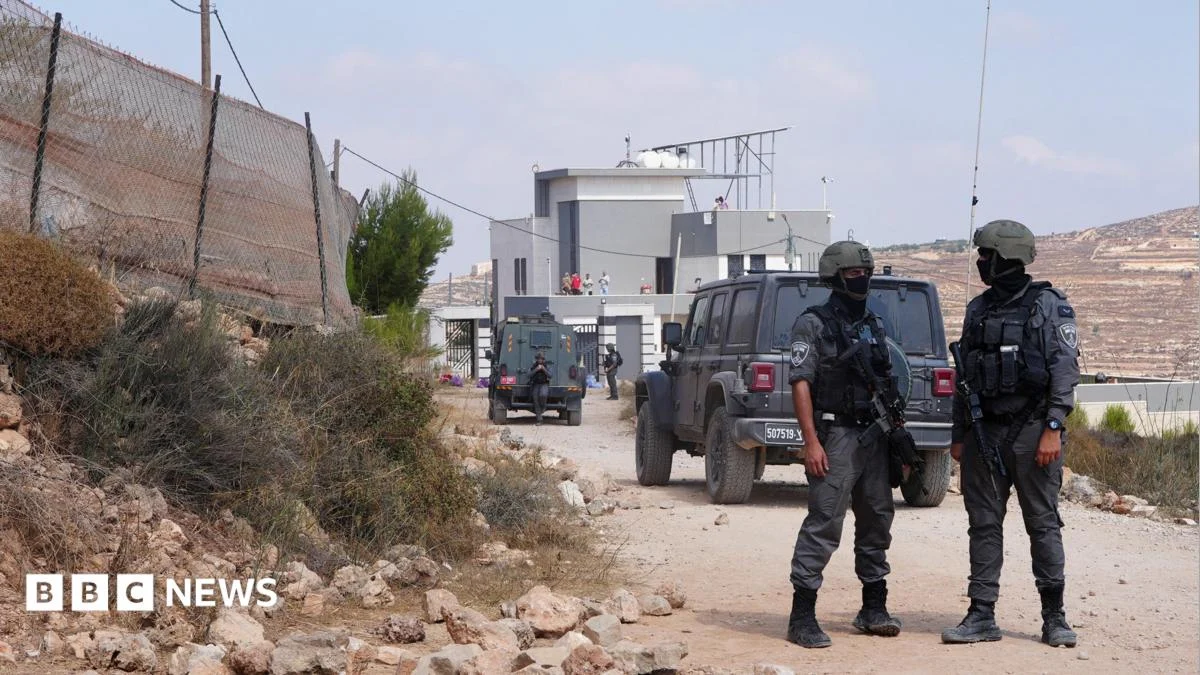
Activists are attempting an aid delivery to Palestinian families whose homes are surrounded by Israeli settlers in the occupied West Bank, according to BBC News.
The report says two families have been trapped in their homes for several days while activists try to bring food, medicine and other supplies.
Key Facts
- Activists are trying to deliver aid to Palestinians in homes besieged by Israeli settlers.
- Two families have been trapped in their homes in the occupied West Bank for several days.
- The situation involves Israeli settlers surrounding Palestinian homes.
- Aid delivery attempts are underway amid the blockade.
- Families remain isolated while activists seek to provide assistance.
Who is affected?
The source identifies two Palestinian families living in the occupied West Bank who have been unable to leave their houses because of the presence of Israeli settlers around them. Being trapped in a home means residents cannot access outside markets, medical care or other essential services.
Although the source does not give names or ages, it notes that the families have been in this situation for several days, indicating a prolonged restriction of movement. The broader context of the West Bank includes many areas where settlement outposts are located near Palestinian communities, which can lead to restrictions on movement and access.
Activists, whose exact number or affiliation is not specified, are trying to reach these families to provide humanitarian aid. Their efforts reflect a response to the immediate needs of people who are cut off from regular supply chains.
What does the aid delivery effort involve?
- According to the report, activists are attempting an aid delivery that would bring items such as food, medicine and other basic necessities to the trapped families.
- The aid is intended to alleviate the immediate hardship caused by the blockade of the homes.
- The source does not describe the exact method of delivery, whether by vehicle, on foot or through coordination with local authorities.
- It also does not state whether any aid has already reached the families or if the attempt is still ongoing.
- In similar situations, humanitarian actors often negotiate with local authorities or community leaders to secure safe passage for aid convoys.
- The report leaves open whether such negotiations are taking place in this case.
What happens next?
The source does not provide information on what will occur after the current aid delivery attempt.
It does not say whether the activists will succeed in reaching the families, how long the siege might continue, or if any official response will be issued.
Readers should note that the situation remains fluid, and further developments could include successful delivery of supplies, a change in the positioning of settlers, or statements from Israeli or Palestinian officials regarding the incident.
Because the report is based on a single source, any predictions about the immediate future are speculative and should be treated with caution.
What We Know — and What We Don’t
Verified by the source:
- Activists are attempting to deliver aid to Palestinian families in homes besieged by Israeli settlers.
- Two families have been trapped in their homes in the occupied West Bank for several days.
Still unconfirmed:
- The exact number of activists involved in the aid delivery attempt.
- Whether any aid has successfully reached the families so far.
- The precise length of time the families have been trapped beyond “several days.”
- Any statements or actions taken by Israeli settlers, Israeli authorities or Palestinian officials regarding the situation.
- What specific items are being carried in the aid delivery.
Why It Matters
This incident highlights the humanitarian challenges that can arise when civilian populations are caught in the midst of settlement-related tensions in the occupied West Bank. Restrictions on movement that prevent families from accessing basic services raise concerns under international humanitarian law, which protects civilians in conflict zones.
Efforts to deliver aid, even when small in scale, draw attention to the need for unimpeded access for humanitarian actors and the protection of non‑combatants. For readers interested in the broader conflict, such episodes illustrate how localized incidents can reflect wider patterns of settlement expansion and friction between communities.
For more on the broader conflict, see our war-geopolitics coverage.
What To Watch
Future updates may clarify whether the aid delivery succeeds, how long the blockade persists, and whether any official bodies issue statements or take steps to ease the situation.
Monitoring reports from local humanitarian groups, the United Nations or news outlets can help verify what actually occurs on the ground.