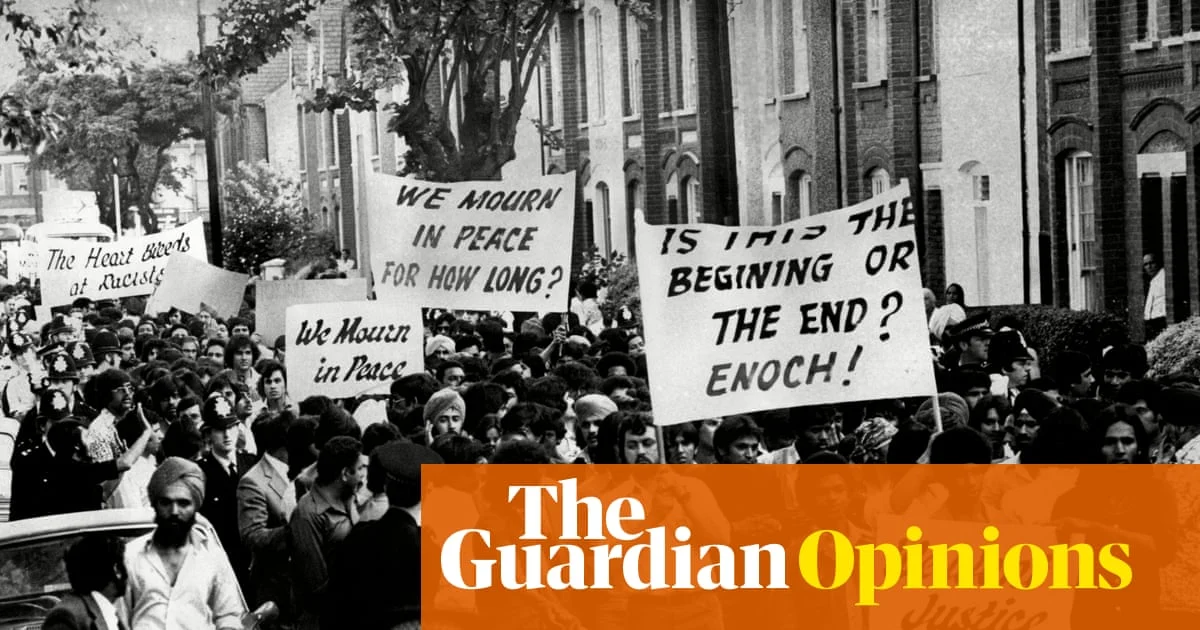
In 1976, a racist murder in Southall shocked the community and exposed deep-seatedhostility toward minority groups. Decades later, that legacy surfaces again amid risingfar-right violence across Britain, prompting some to look back at how anti-racist activism once responded.
Then a 22-year-old Suresh Grover asked policeabout a pool of blood on the pavement after 18-year-old Gurdip Singh Chaggar was stabbed to death by racists. The officer reportedly told him: “Go away, it’s just Indian blood.” This moment encapsulates the systemic disregard for racially motivated attacks at the time.
Key Facts
- Racist murder occurred in Southall during summer 1976.
- Victim was 18-year-old Gurdip Singh Chaggar.
- Police were present and interacted with bystander Suresh Grover.
- Far-right violence today mirrors patterns from 50 years ago.
- 1970s Asian youth movements are cited as inspiration.
What happened in 1976 and why does it matter now?
The July 1976 killing of Gurdip Singh Chaggar in Southall became a flashpoint for anti-racist organizing among South Asian communities. His death highlighted how little protection young people from ethnic minorities had from coordinated attacks by far-right groups.
At the time, figures like Suresh Grover — who witnessed the aftermath — began channeling outrage into structured resistance. These efforts gave birth to influential organizations rooted in direct action rather than passive appeal to authority.
Today, similar scenes play out as mosques face vandalism, activists are assaulted, and hate crimes spike following political rhetoric. Many argue we must return to those grassroots strategies forged half a century ago.
Who is affected and how did this pattern develop?
Young men continue to be targeted and beaten in public spaces, echoing tactics used by neo-Nazi groups throughout the 1970s and 1980s. Mosques have increasingly become symbols under attack, reflecting broader tensions around immigration and identity politics.
Britain’s far-right violence resurged post-2010 due to economic stagnation, social fragmentation, and online radicalization. Yet parallels persist between then and now—particularly when institutions fail to protect vulnerable populations adequately.
The call for an anti-racist uprising isn’t just nostalgia; it reflects frustration with current policies perceived as insufficient against rising extremism.
What We Know — and What We Don’t
Verified by the source:
- Southall murder took place in summer 1976.
- Victim was Gurdip Singh Chaggar, age 18.
- Suresh Grover witnessed the scene and questioned officers.
- Racism-driven violence continues in modern Britain.
- 1970s Asian youth movements offer lessons for today.
Still unconfirmed:
Why It Matters
This article connects historical racism with ongoing societal challenges, showing how unresolved injustices can echo across generations. For readers navigating rising intolerance, understanding these roots may guide more effective responses.
What To Watch
Community leaders say renewed organizing could follow soon if current trends persist. Official investigations into recent incidents remain ongoing.
Britain’s far-right violence echoes its past — and calls for action drawn from 1970s anti-racism.
See also: Politics | War & Geopolitics